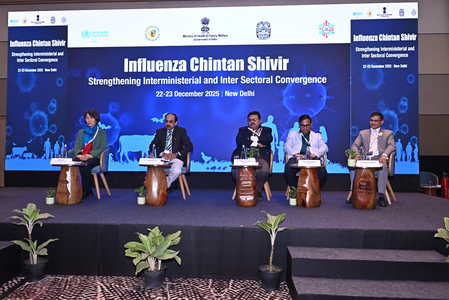
New Delhi, Dec 22 (IANS) The National Centre for Disease Control (NCDC), under the Ministry of Health and Family Welfare (MoHFW), in collaboration with the World Health Organization (WHO) India, on Monday launched a two-day meeting to strengthen influenza preparedness in the country.
The Chintan Shivir on “Strengthening Interministerial and Intersectoral Convergence for Influenza Preparedness and Response”, to be held from December 22 to 23 in New Delhi, aims to provide a structured platform for deliberations among key stakeholders to strengthen preparedness and response mechanisms ahead of the upcoming influenza season in the country.
The meeting comes as influenza continues to pose a significant public health challenge in India and globally. The common and contagious respiratory disease — caused by influenza viruses that infect the nose, throat, and lungs — is characterised by periodic outbreaks, resulting in substantial morbidity and mortality, particularly among vulnerable populations such as young children, older adults, pregnant women, and individuals with chronic illnesses.
“The Chintan Shivir offers an important opportunity for all stakeholders to deliberate on various dimensions of preparedness for resilience against influenza,” said JP Nadda, Union Health Minister, while addressing the inaugural session virtually.
“It is vital to ensure preparedness and response activities, including surge capacities, are well aligned for the forthcoming influenza season,” he added.
Underlining the importance of the Integrated Disease Surveillance Programme (IDSP), the Union Health Minister stressed that coordinated and synergistic efforts by the Centre and States are essential to ensure robust and collaborative surveillance systems across India.
The Ministry noted that it continues to closely monitor seasonal influenza trends across States and UTs in real time through the IDSP network.
The deliberations also emphasised that influenza preparedness cannot remain siloed and must be supported through convergence across sectors for surveillance, early warning, laboratory preparedness, clinical readiness, and effective risk communication.
The event, which witnessed participation from around 110 representatives from a wide range of ministries, departments, and institutions, advanced a more structured and actionable approach to preparedness review by States, UTs, and institutions.
This includes “the development of a practical preparedness checklist to support readiness assessments, identify gaps, and guide time-bound follow-up actions. The discussions reinforced the need for timely information sharing, clarity of roles and responsibilities, and coordinated action across departments,” the Ministry said.
The Chintan Shivir also marked an important step towards strengthening One Health–based preparedness by linking human, animal, and environmental health systems.
“By fostering whole-of-government coordination through a One Health lens, the initiative contributes to strengthening India’s pandemic preparedness and response capabilities and advancing national and global health security, in the spirit of Vasudhaiva Kutumbakam,” the Ministry said.
–IANS
rvt/