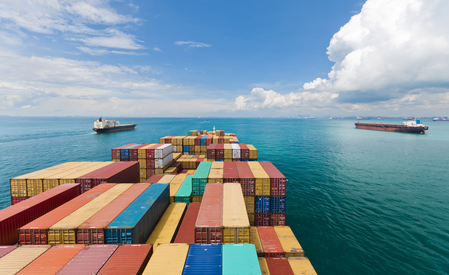
New Delhi, Jan 1 (IANS) The neglect of Karachi, a city that handles 76 per cent of Pakistan’s trade, is being seen as a major factor in slowing the growth rate of Pakistan’s economy to a crawl of less than 3 per cent.
According to an article in Pakistan’s Dawn newspaper, without addressing Karachi’s acute water shortage and other infrastructure issues, Pakistan cannot achieve its growth targets.
The article authored by Mohammad Younus Dagha, a former Federal Secretary, states that Karachi has been deprived of its rightful share of more than Rs 3 trillion since 2010. Had that amount been spent on Karachi, the country would not have reached this chaotic situation.
“With Karachi’s consistent neglect, Pakistan has been suffering from a low average growth syndrome since 2010. The Prime Minister’s Economic Transformation Agenda and Implementation Plan (2024-29) sets a growth target of six per cent. In the first year of the plan, we achieved only 2.7 per cent. Pakistan will continue to remain in a low-growth quagmire unless it improves the infrastructure of its growth engine, Karachi, which contributes 50 per cent of the country’s exports and handles 76 per cent of its trade,” the article states.
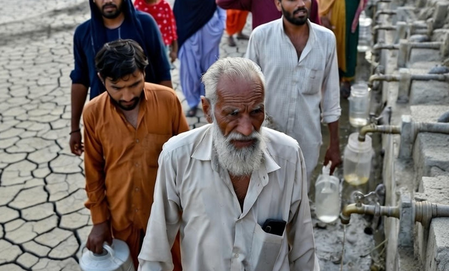
The article highlights that, apart from poor infrastructure, Karachi is facing an acute shortage of water.
Karachi needs 1,200-1,300 MGD (million gallons per day) of water. However, it gets roughly 550 MGD from Keenjhar Lake and 100 MGD from Hub Dam. The fact that most of this water reaches consumers through water tankers is another issue. The shortage is estimated to be 650 MGD or roughly 50 per cent of Karachi’s needs.
“For 1,000 gallons of water, the agricultural landowners (using 95pc of the water resources of Sindh) pay only 20 paisas compared to a tanker in Karachi, which costs Rs 1,000 for the same quantity,” the article states.
It further points out that the provincial government has also been refusing to provide additional water for Karachi out of Sindh’s share in the Indus Water Accord. The state government approached the Indus River System Authority (IRSA) for a separate allocation to increase the supply to Karachi.
However, IRSA reminded Sindh that the IWA signed by the four provinces specifically mentions that Sindh’s allocation includes water for Karachi’s urban and industrial use and that such supplies for the metropolitan city will be given priority.
The article laments that Karachi pays 90 per cent of Sindh’s taxes and 60 per cent of federal taxes, yet it has not received its rightful share of more than Rs 3 trillion since 2010 from the Sindh government, the NFC beneficiary.
The IWA provides for preferential treatment for Karachi’s water needs, but the Sindh government won’t abide by it even if it means only a tiny fraction of the province’s water resources.
–IANS
sps/dan