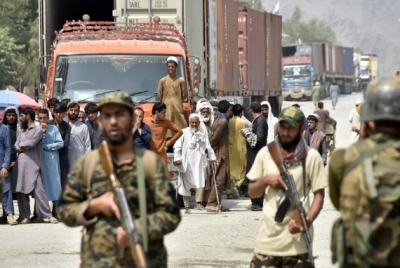
Islamabad/Kabul, Jan 1 (IANS) The recent Pakistan-Afghanistan border clashes have triggered a spike in militant activity inside Pakistan, reflected in a rise in suicide bombings and attacks on security personnel, a report said on Thursday.
Citing Islamabad-based think tank Centre for Research and Security Studies (CRSS), it said at least 3,187 people, including civilians and security personnel, were killed, and 1981 were injured in the first 11 months of 2025 – marking a 25 per cent rise in fatalities compared with militant attacks recorded in 2024.
“The ongoing border conflict with Afghanistan is costing Pakistan dearly, due to increased military spending not only to confront its neighbour but also to tackle the rising number of terror attacks within the country. Thus, Pakistan’s Finance Ministry has approved various new demands made for defence procurement and services amid the tensions on both eastern and western borders this year. The prolonged conflict with Afghanistan would only bleed Pakistan, experts warned,” a report in ‘European Times’ detailed.
According to the report, Islamabad accused Taliban- backed outfits of the attacks inside Pakistan, a claim Kabul rejected as misinformation, while counter-accusing Pakistan for using terror group Islamic State to undermine Afghanistan’s stability and sovereignty.
Islamabad has complained that Tehrik-e-Taliban Pakistan (TTP), also known as Pakistan Taliban, has carried out frequent attacks in Pakistan since the Taliban’s return to power in Kabul.
“The recent airstrike by Pakistan inside Afghanistan turned out to be the frustration and inability of Islamabad to rein in TTP activities. Taliban responded with strong gunfire across the border, inflicting heavy losses on Pakistan. According to various reports, at least 44 Pakistani soldiers were killed in Afghanistan’s gunfire until mid-December, even as the Taliban government claimed the death toll was 58 in October. While the Taliban has no match to Pakistan’s big and strong-armed forces, its guerrilla tactics can be troublesome for Islamabad,” the report detailed.
“Learning from history, particularly the Soviet and the American experience, we should not commit the blunder of using our ground forces for any prolonged kinetic action in Afghanistan,” said former Pakistani diplomat Javid Husain.
Mir Mostafizur Rahaman, an expert on South Asian geopolitics, warned that the prolonged conflict risk deepening Pakistan’s economic challenges
“Pakistan itself stands at a precarious crossroads. The country’s economy is struggling to stay afloat under an IMF programme, its rupee continues to slide, and inflation remains punishingly high. Any prolonged military confrontation – even a low-intensity border conflict – would derail its fragile recovery, diverting scarce resources from development to defence,” European Times quoted Rahaman as saying.
–IANS
scor/as