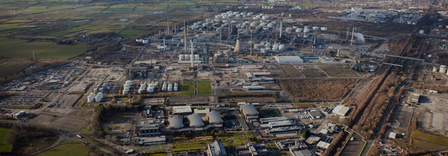
Stanlow (UK), Jan 14 (IANS) Essar Energy Transition is proud to announce that 2025 has marked a period of record-breaking progress at the Stanlow refinery at Ellesmere Port, Liverpool. Following a landmark investment year, the company has achieved its highest-ever domestic sales since its acquisition by Essar in 2011, reinforcing its position as a cornerstone of the UK’s energy security.
The growth seen in 2025 highlights the continued strong demand for refined products in the UK and the essential role of the refining sector.
2025: A Landmark Year for Domestic Supply
Despite the complexities of a major infrastructure transition, 2025 was a record-breaking period for Essar Energy Transition. Driven by its robust pan-UK strategy, the company has successfully leveraged its extensive supply infrastructure to grow market share and deliver value to its customers.
Operational throughput has seen a significant uptick, with volumes up 8 per cent compared to 2024. This growth is most visible at the refinery gantry, where dispatch volumes are now approaching record highs, demonstrating the efficiency and reliability of the Stanlow site.
Strategic Growth Across Retail and Aviation
The record performance in 2025 was bolstered by growth across all business units:
Retail Expansion: The retail forecourt business continues to scale rapidly, with an increasing number of sites (Essar-branded retail forecourts now up to 58), widening coverage and enhanced brand presence. In addition to the branded sites, Essar Energy Transition is also delivering fuel to more than 100 dealer-owned forecourts in the UK. The company successfully delivered a “price drop” campaign that began in early December for its company-leased, dealer-operated sites, which has driven strong consumer demand.
Aviation Excellence: Essar Energy Transition has significantly widened its airport network, now directly supplying 10 major airports.
Supply Resilience: Beyond Stanlow, the company has enhanced UK fuel security through strategic supply points at Kingsbury, Northampton, Grangemouth, Oikos, and Grays. This distribution network proved vital in 2025, allowing the company to respond immediately to urgent supply requests from the rail, bus, and commercial transport sectors, which followed the closure of two of the UK’s six refineries in 2025.
Decarbonising for the Future
Highlights also include a $100 million investment in a major refinery ‘turnaround’, one of the largest and most complex in Stanlow’s history. Part of a $350m investment programme of improvement projects, this didn’t just maintain the site; it transformed it. The turnaround delivered an approximate 8 per cent increase in throughput capability and saw the installation of the UK’s first hydrogen-ready furnace, a critical step in the refinery’s decarbonisation journey.
The Importance of a Thriving Domestic Sector and need for CBAM
The success of 2025 highlights the essential role of a thriving domestic refining sector. To ensure the long-term sustainability of this vital industry, Essar Energy Transition continues to advocate for the inclusion of refining in the UK’s Carbon Border Adjustment Mechanism (CBAM). This would ensure a level-playing field for industry and protect the UK from high-carbon imports.
Deepak Maheshwari, CEO of EET Fuels, commented: “I am delighted with the performance of Stanlow in 2025. This record-breaking year is a testament to the hard work and dedication of our entire team, who successfully navigated a major turnaround and delivered our best-ever domestic sales figures. I would also like to thank our customers for their support. Stanlow has been fuelling the UK for over 100 years and this performance highlights that it remains critically important to the wider UK economy. We are investing to ensure Stanlow is well-placed for a long-term, sustainable future. To secure this future, the UK domestic refining sector must remain competitive. This underscores the urgent need for refining to be included in CBAM, ensuring a level playing field when it comes to competing with high-carbon imported fuels.”
–IANS
skp/