Seoul, Jan 18 (IANS) The number of companies operating in South Korea’s free economic zones rose 4.4 per cent from a year earlier in 2024, driving gains in employment and investment, the industry ministry said on Sunday.
A total of 8,590 companies were operating in the country’s free economic zones at the end of 2024, up from 8,228 firms a year earlier, according to data from the Ministry of Trade, Industry and Resources, reports Yonhap news agency.
Employment at those firms increased 8.8 percent on-year to 254,775 people as of end-2024, while investment climbed 14.4 percent to about 5.9 trillion won (US$3.99 billion).
By region, the free economic zone in the western city of Incheon accounted for the largest share of tenant companies at 44.9 percent, followed by the one in Busan and Jinhae in the southern region at 28.4 percent, and the zone in the southeastern city of Daegu and North Gyeongsang Province at 12.2 percent.
Foreign-invested companies totalled 690, up 8.2 percent from a year earlier, while their foreign direct investment rose 4.3 percent to 3.8 trillion won.
“Free economic zones continue to show steady growth, and are strengthening their role as hubs for foreign investment and regional economic development,” a ministry official said. “We will closely identify region- and industry-specific challenges, and actively support corporate activities and investment.”
Free economic zones are areas where the government eases regulations and provides incentives to make it easier for companies to invest and operate, with the goal of attracting foreign investment and promoting advanced industries.
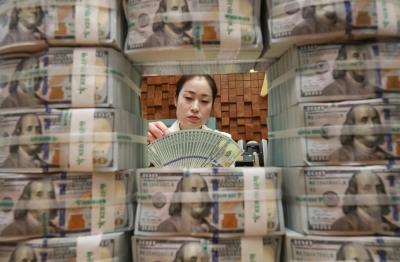
Meanwhile, foreign direct investment (FDI) pledges to South Korea reached a record high of over US$36 billion in 2025, government data showed, thanks to eased political uncertainties here and the Asia-Pacific Economic Cooperation (APEC) gathering held in the country’s southeastern city of Gyeongju.
Last year, South Korea received $36.05 billion worth of FDI commitments, up 4.3 percent from $34.57 billion in 2024, according to the Ministry of Trade, Industry and Resources.
In 2025, the actual amount of investment that arrived in the country also surged 16.3 percent from a year earlier to $17.95 billion.
—IANS
na/