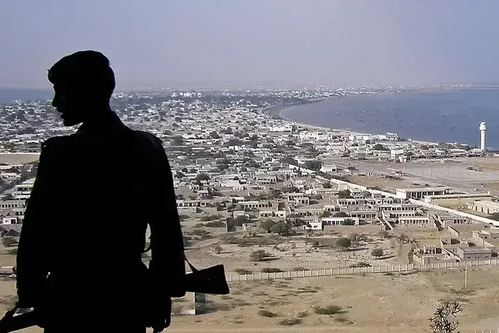
Quetta, Feb 2 (IANS) The Baloch Liberation Army’s recent attacks under ‘Operation Herof Phase 2.0’ demonstrate a stark escalation in Pakistan’s long-simmering conflict in Balochistan, a report has highlighted. The BLA claimed responsibility for strikes in 14 cities and 48 sites on January 31, including Quetta, Gwadar, and resource-rich areas like Chagai, causing casualties on both sides. The figures remained disputed as Pakistani authorities reported that dozens of fighters were killed while BLA stated that security forces suffered heavy losses.
“Yet this surge in armed resistance did not emerge in a vacuum. It is the bitter fruit of decades of systemic abuse, marginalisation, and state repression inflicted upon the Baloch people by successive Pakistani governments. Far from isolated militancy, the violence reflects a profound failure of governance, one rooted in exploitation, enforced disappearances, extrajudicial killings, and the suppression of peaceful dissent, that has radicalised generations and eroded any faith in dialogue or justice,” Daniel Kaplan wrote in an opinion piece for the ‘One World Outlook’.
Balochistan, which is among Pakistan’s poorest and least-developed regions, has vast mineral wealth, including gold, copper and natural gas. Local residents have received little benefit despite projects like Reko Diq and Saindak promising billions in revenue. Resources are extracted with minimal input or profit sharing of residents, sparking resentment among people of Balochistan that the province is being used as a colonial outpost for Islamabad and foreign capital. This economic disenfranchisement is increased by heavy militarisation, where security forces give importance to protecting investments instead of protecting people.
“The core grievance driving the insurgency remains the policy of enforced disappearances, a grave international crime under which thousands have vanished since the early 2000s. Pakistan’s Commission of Inquiry on Enforced Disappearances has recorded thousands of cases, but accountability is nonexistent,” wrote Kaplan.
“Human Rights Watch and Amnesty International have documented how security forces abduct activists, students, journalists, and ordinary citizens, often torturing or executing them extrajudicially. Bodies are dumped with signs of torture, a practice derisively called ‘kill and dump.’ UN experts in 2025 condemned the ‘unrelenting use’ of such disappearances in Balochistan, urging independent investigations and criminalisation of the practice, calls repeatedly ignored,” he added.
Balochistan has witnessed escalation in recent years. The killing of student Hayat Baloch by paramilitary forces in 2025 sparked anger among residents, according to One World Outlook opinion piece. Authorities launched a brutal crackdown, including internet shutdowns, after Haq Do Tehreek held protests in Gwadar in 2023 against exploitation and rights abuses. The 2024 elections, widely seen as rigged, further isolated the people of Balochistan.
In March 2025, prominent Baloch Yakjehti Committee (BYC) leader Mahrang Baloch was arrested during protests that were held against violence and disappearances. Since then, Mahrang Baloch remains in custody and has faced several charges under anti-terrorism laws, with reports of mistreatment in detention. The case of Mahrang Baloch and others showcases how the state silences voices demanding accountability, pushing more towards armed struggle, including women participation in Operation Herof Phase 2.0.
–IANS
akl/as