Washington, Feb 9 (IANS) When thousands of Indian Institute of Technology alumni, entrepreneurs and executives gather in Long Beach, California, next April, the agenda will extend well beyond networking and keynote speeches. For the organisers of the Global Pan-IIT Conference, the four-day event is intended as a statement about how a relatively small community of Indian-origin technologists has come to play an outsized role in shaping innovation, capital and public life in both India and the United States.
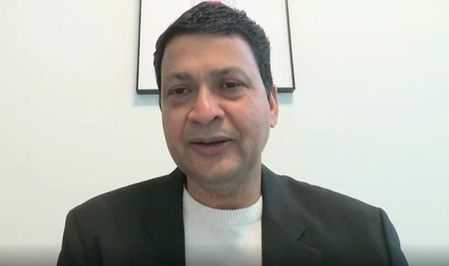
The conference, scheduled for April 22–25, 2026, will be held under the theme “Innovate, Ignite and Thrive” and is expected to attract more than 2,500 participants from across the world. According to Shashi Tripathi, a venture capitalist and the chair of the 2026 gathering, the event aims to bring together “some of the world’s brightest minds and industry leaders” at a moment when technology, geopolitics and economic power are being rapidly reshaped.
Attendance is projected at approximately 2,500.
The conference will be structured around themes that reflect both opportunity and anxiety in the global economy: artificial intelligence, health and sustainability, investment and venture capital, private equity and exit planning, and what organisers describe as “global connect geopolitical issues.”
In an interview to IANS, Tripathi said there will be six grand keynotes, along with panels, fireside chats and workshops, including a session led by Nvidia focused on go-to-market strategies and fundraising for startups.
Yet Tripathi emphasised that the gathering is not intended to be exclusive. “Anyone can attend. You don’t need to be from IIT, you don’t need to be Indian,” he said. “We are very inclusive.”
That openness, he suggested, reflects the way the Indian diaspora — and IIT alumni in particular — have embedded themselves into the American economy while remaining closely tied to India. “India’s diaspora in general is approximately 2 per cent of the US population, and we are adding 8 per cent of the economy,” he said. “Think about that proportion.”
For decades, IIT graduates have been synonymous with Silicon Valley engineering talent. Tripathi argued that the community has since expanded into healthcare, startups, venture capital and corporate leadership. “We are now moving beyond tech,” he said. “We are in healthcare. We are in businesses. We are into startups. We are creating the economy as part of this ecosystem.”
Questions about brain drain, particularly within India, continue to surface, he said. Tripathi addressed them directly. “I will talk about the elephant in the room,” he said, referring to the long-standing concern that India’s best minds leave the country. But he rejected the idea that migration has weakened India. “While we are great citizens outside of the country, for example in the U.S., we still are deeply entrenched with the Indian ecosystem,” he told IANS.
That connection, he added, goes beyond remittances. “That ecosystem is not just sending money. That ecosystem is creating a startup,” Tripathi said, citing his own investment choices. “Fifty per cent of my portfolio is based in India because I know the Indian ecosystem.”
Artificial intelligence is expected to dominate discussion at the conference, and Tripathi described it as a turning point comparable to — and possibly larger than — the advent of the internet. “I believe that AI is the biggest revolution,” he said, arguing that its accessibility sets it apart from earlier technological shifts. “In case of AI, you don’t have to learn. You practically open your phone and start talking.”
While fears about job displacement persist, Tripathi was blunt. “Those who are doubting AI and not using AI, their job will be replaced,” he said. At the same time, he expressed confidence that new technologies would ultimately create more opportunities, as past revolutions have done.
In response to a question, Tripathi pointed to what he sees as a natural partnership between India and the United States in artificial intelligence. The United States, he said, leads in investment and innovation, while India offers scale and diversity through its vast digital infrastructure. He cited India’s national identity and payments systems as examples of how large populations generate varied data. “The more data AI models has and more variation AI models has, the higher the accuracy of the model will be,” he said.
With India investing heavily in digital platforms and AI initiatives, and the United States home to many of the world’s largest technology companies, Tripathi said collaboration between the two countries could be decisive. “If these two collaborate together, these two can create a very powerful AI board into the future,” he said.
Beyond panels and policy discussions, the conference is designed to be immersive. Organisers are planning curated lunch discussions on careers and hiring, cultural programming in the evenings, morning yoga sessions and workshops for children. Audience engagement will be encouraged through a conference app allowing real-time questions and interaction.
The Pan-IIT conference series has previously featured global figures such as Narendra Modi, Bill Gates, Bill Clinton, Satya Nadella and Sundar Pichai. For Tripathi, the 2026 edition is less about celebrity than continuity — a reminder that a network forged in India’s engineering classrooms now straddles two economies, and increasingly, two futures.
–IANS
lkj/rs