Seoul, March 13 (IANS) South Korea’s Industry Minister Kim Jung-kwan said Friday the government’s fuel price cap system is already showing signs of stabilising prices less than a day after taking effect.
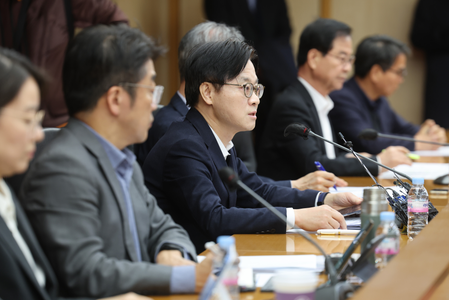
Kim held a meeting with officials from South Korean oil refineries, gas stations and the Korea National Oil Corporation to review the domestic energy markets on the first day of the fuel price cap system’s implementation, Yonhap News Agency reported.
The temporary cap system took effect at midnight Thursday as part of the government’s efforts to ease soaring fuel prices and reduce burdens on consumers, setting maximum prices of products oil refineries supply to gas stations and distributors.
The initial price ceiling was set at 1,724 won (USD 1.16) per litre for regular gasoline, 1,713 won per litre for diesel and 1,320 won per litre for lamp oil.
The maximum price threshold will be readjusted every two weeks to reflect changes in international oil prices until the government decides to end the system when it determines that domestic fuel prices have been stabilized.
After the meeting, Kim told reporters the market is already experiencing price cuts on the first day of the system, noting that gas stations and oil refineries are actively cooperating with the program.
Kim asked gas stations during the meeting to cooperate with the program as price ceilings are applied on refiners’ supply prices, according to his office.
On Friday, Kim also convened an intergovernmental task force meeting on the inspection of unfair market practices involving fuel prices.
“The fuel price cap system is a minimum safeguard to protect the national economy in a time of crisis, not a measure to control the market,” Kim said during the meeting, vowing a stern response against actions attempting to take advantage of the situation, such as hoarding and price gouging.
The task force has conducted more than 800 inspections on gas stations suspected of illegally distributing oil products and nabbed 20 cases of illicit activities, according to the ministry.
Meanwhile, regarding the petrochemical industry’s difficulties in securing naphtha due to the Middle Eastern crisis, Kim told reporters the government will restrict exports of domestically produced products and review the possible release of naphtha reserves when the country taps its strategic oil reserve.
Recently, Yeochun NCC Co., the country’s largest ethylene producer, and other companies announced the possibility of “force majeure,” indicating disruptions in naphtha supplies.
South Korea ships over half of naphtha imports through the Strait of Hormuz, which is de facto closed amid the Mideast tensions.
The minister also said the government is considering various tax measures it can use for energy price stabilization and is preparing to provide energy vouchers to vulnerable households.
–IANS
akl/