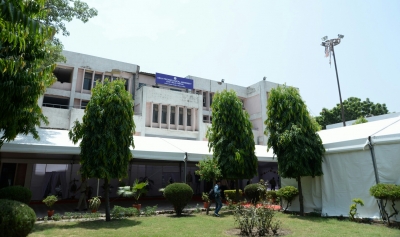
New Delhi, March 31 (IANS) The National Council for Cement and Building Materials (NCB) has signed a memorandum of understanding with Delhi Technological University (DTU) to strengthen research–academia collaboration and skill development in the domestic cement and construction sector, an official statement said on Tuesday.
The collaboration will promote joint research and innovation in cement and concrete technologies, provide training opportunities for students, professionals and stakeholders, and enhance skill development as well as capacity building across the sector,
It will also facilitate knowledge exchange between academia and industry, enabling the dissemination of best practices and technical expertise, the statement from the Ministry of Commerce and Industry said.
The partnership is expected to contribute significantly towards advancing sustainable and resilient infrastructure in the country, while strengthening India’s construction ecosystem through improved technical capabilities and institutional collaboration.
A recent report said that the sixfold surge in public spending has catalysed private investment and stimulated demand for core industries such as steel and cement.
Capital‑intensive sectors such as cement and metals should gain from the government’s infrastructure spending. Total cement demand is expected to rise about 6–7 per cent and steel demand roughly by 8 per cent, another report said.
Cement manufacturers’ profitability will rise about 2.5 per cent to 3.5 per cent this fiscal year due to improved realisations driven by higher volumes and premiumisation amid steady selling prices and cost of inputs.
Cement volumes are seen rising 6.5–7.5 per cent year‑on‑year after a 5 per cent growth last fiscal, with a moderate 5 per cent growth in the first half and a projected 8–9 per cent surge in the second half fuelled by pent-up demand and better liquidity.
The manufacturers saw a 5 per cent increase in realisations in the first half of FY26. The momentum is expected to slow in the second half, with realisations growing a modest 0-2 per cent, it added.
—IANS
aar/na