New Delhi, April 4 (IANS) The government is working to ensure minimal disruption to supply chains amid global uncertainties, while remaining prepared for a potential dip in exports and imports, Commerce Secretary Rajesh Agrawal said on Saturday.
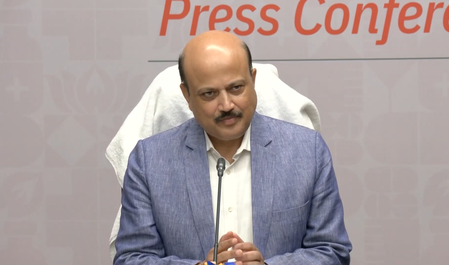
Addressing the press conference on the sidelines of a ‘Chintan Shivir’ session in Hyderabad, Agrawal told the media that the initiative aims to bring together government and industry stakeholders to identify challenges and chart a clear roadmap.
The official also stated that India is focusing on sustaining the growth trajectory of pharmaceutical exports.
He said the exercise, guided by Prime Minister Narendra Modi’s vision, seeks to define the roles and responsibilities of all stakeholders through detailed consultations.
Agrawal noted that discussions focused on maintaining India’s leadership in emerging areas such as biosimilars, biologics and innovative drugs, while ensuring that both export and import supply chains remain resilient and insulated from external shocks.
India’s pharmaceutical industry, valued at over $60 billion, remains a key contributor to exports and global healthcare supply chains.
On the ongoing crisis in the Middle East, the official said it could have some impact on energy supply chains, which are critical for the sector.
However, he expressed confidence in the industry’s ability to adapt.
“India has a strong adaptive and resilient industry. We will be able to address these challenges going forward,” he said, adding that there is no immediate impact on prices at present.
Agrawal said the government will work closely with industry stakeholders to address any emerging challenges, while ensuring that supplies remain unaffected.
Earlier this week, PM Modi chaired a meeting of the Cabinet Committee on Security (CCS) to review the evolving situation in West Asia and assess its potential impact on India’s national interests.
This was the second CCS meeting since tensions escalated on February 28, 2026, following US-Israel airstrikes on Iranian targets and subsequent retaliatory actions, which have led to disruptions in the region, including in the Strait of Hormuz, and volatility in global energy markets.
–IANS
ag/na