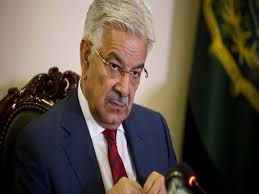
Washington, April 10 (IANS) A fresh diplomatic row erupted after Pakistan’s Defence Minister Khawaja Muhammad Asif posted sharply critical remarks about Israel, drawing swift condemnation from Israeli authorities, US lawmakers and experts at a sensitive moment in ongoing ceasefire efforts.
Asif wrote on X that “Israel is evil and a curse for humanity,” alleging that “genocide is being committed in Lebanon” and that “innocent citizens are being killed by Israel, first Gaza, then Iran and now Lebanon.” He added: “I hope and pray people who created this cancerous state on Palestinian land to get rid of European jews burn in hell.”
The comments came less than 50 hours before high-stakes diplomatic talks in Islamabad, where Pakistan is hosting discussions between US and Iran linked to broader regional tensions.
Reacting sharply, Israel’s Prime Minister’s Office said: “Pakistan Defence Minister’s call for Israel’s annihilation is outrageous. This is not a statement that can be tolerated from any government, especially not from one that claims to be a neutral arbiter for peace.”
US Congressman Josh Gottheimer also criticised the remarks, calling them “vile rhetoric targeting Jews and Israel.” He said: “Hateful rhetoric like this is beyond unacceptable and unproductive at this fragile moment. This is not diplomacy and must be condemned.”
The controversy has cast a shadow over Pakistan’s role as a mediator. Islamabad has been positioning itself as a venue for talks involving the United States and Iran, amid escalating tensions in the Middle East.
Criticism also emerged from other commentators. Emily Schrader described the remarks as a “Jew hating diatribe,” quoting Asif’s statement that “Israel is evil and curse for humanity….I hope and pray people who created this cancerous state on Palestinian land to get rid of European jews burn in hell.” She added: “Pakistan is not an impartial actor and they should not be permitted to mediate anything.”
Former US official Ellie Cohanim also questioned Islamabad’s role, saying: “Many of us were concerned by the idea of the country which harbored & sheltered 9/11 mastermind Osama Bin Laden to serve as any kind of ‘mediator’ role.” She added that “with this statement Pakistan managed to blow any notion of objectivity or distance from the radical Islamist agenda.”
Observers noted that the timing of the post — as delegations were arriving and security arrangements were being finalised — raised questions about the host country’s perceived neutrality.
The remarks also follow earlier confusion over a ceasefire announcement attributed to Pakistan’s leadership. That announcement had suggested the ceasefire applied “everywhere including Lebanon,” a position later contradicted by Israel, which clarified that Lebanon was not included.
The Israeli position, as reiterated by its leadership, is that operations in Lebanon are separate from the broader ceasefire framework. The Israeli military has continued operations against Hezbollah, including what was described as a major bombardment on April 8.
The sequence of events — first the ceasefire scope ambiguity and now the defence minister’s comments — has led to criticism that Pakistan’s role as mediator is being undermined at a critical juncture.
Despite the controversy, preparations for the talks in Islamabad have continued, with extensive security measures in place and international delegations already on the ground.
The diplomatic stakes are high. The talks are being described as one of the most significant US-Iran engagements in decades, with regional stability hanging in the balance.
–IANS
lkj/rs