Washington, April 11 (IANS) Pakistan’s position on women is not merely a case of gender inequality but reflects a broader systemic failure by the authorities to protect basic human rights.
Amid a climate of institutional tolerance, practices such as forced marriages and so-called “honour killings” continue to persist across the country, a report detailed this week.
Writing for the US-based online platform ‘Medium’, European political analyst and journalist Dimitra Staikou stated that despite efforts by Pakistan’s political leadership to project an image of modernisation and global engagement, the lived experiences of women expose a stark gap between “rhetoric and reality”.
She stressed that failure to protect women’s rights goes beyond a moral concern, acting as a barrier to sustainable development and weakening both social cohesion and economic progress.
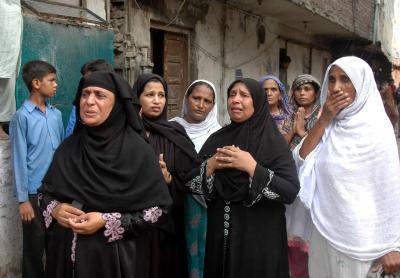
“On March 16, 2026, in Rahim Yar Khan, Pakistan, at least eight women lost their lives and dozens more were injured when the roof of a building collapsed as they had gathered to receive state financial aid. They had been forced onto the rooftop due to severe overcrowding, in a process that was ostensibly designed to support them. This incident is not merely an ‘accident’; it starkly illustrates the vulnerability of women even within programmes intended for their protection,” Staikou detailed.
“Just weeks earlier, in early February 2026, in the province of Punjab (Pakistan), a young woman was murdered by members of her own family in yet another ‘honour killing’, reportedly for refusing a forced marriage. The case triggered limited local reactions, without leading to meaningful public debate or accountability — an all too familiar pattern,” she added.
Citing a January analysis by the Pakistani newspaper ‘Dawn’, the expert exposed a persistent reality: “Courts in the country continue to misinterpret even fundamental concepts such as consent, leaving rape victims effectively unprotected by the very system meant to deliver justice.”
She highlighted that Pakistan ranks last out of 148 countries in the Global Gender Gap Report 2025 by the World Economic Forum, with only 56.7 per cent of its overall gender gap closed, marking a decline compared to previous years.
“The index, which evaluates equality across economic participation, education, health, and political empowerment, reflects a reality in which women are systematically excluded from the labour market and decision-making processes,’ Staikou stressed.
She further cited international human rights bodies, noting that Amnesty International observed that women in Pakistan “continue to face significant barriers in accessing justice”, while Human Rights Watch (HRW) asserted that gender-based violence “remains pervasive, with authorities consistently failing to protect victims and hold perpetrators accountable”.
Reflecting on Pakistan’s persistent gender inequality Staikou said, “The problem, therefore, is not a lack of awareness or international pressure but a lack of genuine political will.”
–IANS
scor/as