Washington, April 15 (IANS) Amidst growing concerns over Donald Trump’s stance on the alliance and tensions linked to the Iran war, Europe is drawing up a contingency plan to defend the continent using NATO’s existing military structures if the United States reduces its role, a media report said.
Officials are working on proposals some have referred to as a “European NATO”, seeking to place more Europeans in the alliance’s command-and-control roles and supplement US military assets with their own, according to a report by The Wall Street Journal.
The discussions are advancing informally within NATO circles. Participants say the effort is not meant to replace the alliance. Instead, it is aimed at preserving deterrence against Russia, maintaining operational continuity and sustaining nuclear credibility if Washington pulls back forces or support.
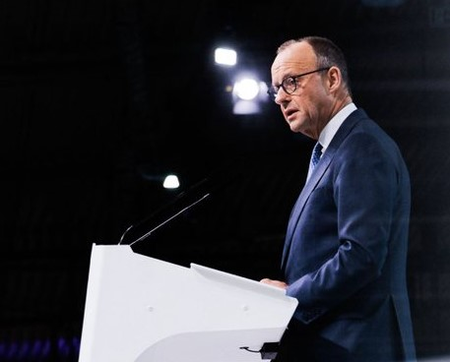
The plan has gained traction after securing backing from Germany, long a sceptic of a Europe-led defence model. A shift in Berlin under Chancellor Friedrich Merz reflects growing concern about US dependability.
The push comes amid mounting unease over Trump’s rhetoric on NATO. He has criticised European allies, calling them “cowards” and describing the alliance as a “paper tiger”. He has also threatened to withdraw support if allies do not align with US priorities, including on Iran.
European leaders say any transition must be gradual. Finland’s President Alexander Stubb said a “burden shifting from the US toward Europe is ongoing and it will continue”, stressing it should happen in a “managed and controllable” way rather than through a sudden US exit.
“The basic message to our American friends is that after all these decades it’s time for Europe to take more responsibility for its own security and defence,” Stubb said.
Germany’s Defence Minister Boris Pistorius said NATO remains “irreplaceable both for Europe and the US” but added: “we Europeans must assume more responsibility for our defence”.
The scale of the task remains significant. NATO’s structure is built around US leadership, from logistics and intelligence to top military command. While more European officers are taking senior roles and leading exercises, key gaps remain.
Officials highlight shortfalls in intelligence, missile warning systems and nuclear deterrence. No European country can match the US nuclear umbrella that underpins NATO’s defence posture.
To address this, European nations are accelerating defence production and coordination. Recent efforts include joint work on advanced weapons and discussions on expanding France’s nuclear deterrent to cover other European countries.
The shift has also revived debate over military conscription. Some leaders argue that national service could strengthen readiness. Finland, which retains a draft, is often cited as an example.
Even so, officials acknowledge that Europe cannot quickly replace the US as NATO’s central military power. Years of underinvestment have left capability gaps that will take time to close.
The urgency has grown amid broader geopolitical strains, including disagreements over Iran and questions about the future of transatlantic ties.
NATO, formed in 1949, has long relied on US military strength as the core of its collective defence system. European calls for greater strategic autonomy have increased in recent years but have yet to fully materialise.
For India, any shift in NATO’s structure could have wider implications for global security dynamics, especially as changes in Europe intersect with developments in West Asia and the Indo-Pacific.
–IANS
lkj/rs