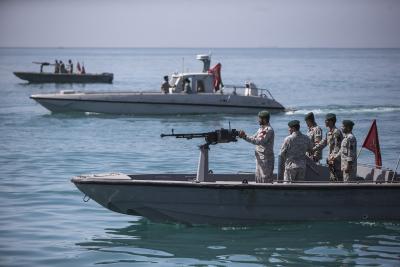
New Delhi, April 29 (IANS) The Strait of Hormuz crisis triggered by the recent US-Iran conflict is not just a regional flashpoint but a defining test for international maritime law — one that could shape how nations behave in other strategic choke points during times of crisis, a report said on Wednesday.
According to a report in ‘Politeia Research Foundation’ (PRF), at current situation in Hormuz highlights a growing tension between the United Nations Convention on the Law of the Sea (UNCLOS), which emphasises the peaceful uses of the oceans, and the Laws of Armed Conflict at Sea, which govern how nations conduct warfare in the maritime domain.
“The world’s critical maritime chokepoints, the narrow straits through which global trade and other shipping transits, have always carried enormous strategic weight. In peacetime, the rules governing straits are codified in the United Nations Convention on the Law of the Sea 1982 (UNCLOS). It enshrines the right of ‘transit passage’ through international straits and states that all ships and aircraft, including warships, may pass through straits used for international navigation ‘continuously and expeditiously’ without being hampered and does not permit suspension of the passage,” the report detailed.
“It also applies to passages through straits that run through the territorial seas of adjoining coastal nations, where transit passage supersedes ‘innocent passage’. However, the situation changes when conflict erupts. The legal architecture of transit passage, designed for the peaceful use of the seas, comes under strain, and the consequences of nations’ actions in conflict ripple far beyond the main theatre of conflict,” it added.
The report stressed that the provisions in UNCLOS clearly prohibit any interference with or suspension of transit or “innocent passage” through straits used for international navigation.
However, both Iran and the US may not treat these provisions binding, as Washington has neither signed nor ratified UNCLOS, while Tehran has signed but not ratified it.
“From a legal standpoint, Iran, as a signatory to UNCLOS, is technically bound by the transit passage regime. By comparison, successive US administrations have treated the core navigation and overflight provisions of UNCLOS as reflective of customary international law and have committed to operating in accordance with those provisions,” it noted.
Emphasising the challenges in applying maritime law during conflict, the report said, “The prevailing legal view is that transit passage should supersede the actions of belligerent nations in conflict. However, if the strait’s bordering state is itself belligerent, the situation becomes more challenging. The belligerents may seek to interdict enemy vessels, lay minefields, or enforce a blockade, measures that in practice amount to a closure, whatever the legal justification offered.
–IANS
scor/as