Seoul, May 3 (IANS) South Korean Finance Minister Koo Yun-cheol on Sunday called for strengthening regional cooperation in responding to growing external economic uncertainty from the US-Israeli war against Iran, the country’s Finance Ministry said.
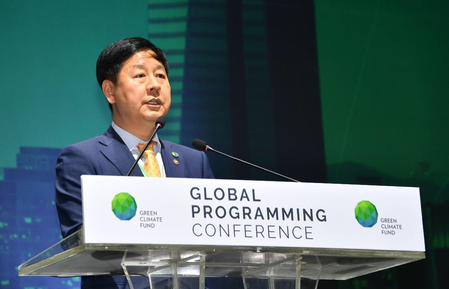
Koo made the call during the 29th meeting of ASEAN+3 Finance Ministers and Central bank governors held on Sunday in Samarkand, Uzbekistan, according to the Ministry.
ASEAN+3 involves member states of the Association of Southeast Asian Nations (ASEAN) and its three Northeast Asian dialogue partners — South Korea, Japan and China.
“The Middle East war has further expanded regional economic uncertainty,” Koo said.
“Against this backdrop, ASEAN+3 cooperation, which has served as a buttress during a regional crisis, is becoming increasingly important, as quoted by Yonhap news agency report.
The Finance Minister said the Middle East crisis poses a threat to the South Korean economy, highlighting the government’s efforts to prop up the economy, including the creation of the 26.2 trillion-won ($17.7 billion) extra budget.
Separately, Koo chaired a trilateral meeting of Finance Ministers and Central bank governors from South Korea, China and Japan.
He also called for stepped-up cooperation among the three nations in dealing with downside economic risks from the Iran war, according to the Ministry.
ASEAN+3 Finance and Central Bank deputies held a meeting last month where South Korea was represented by Moon Ji-sung, Deputy Minister for international economic affairs.
During the meeting, major economic organisations, such as the International Monetary Fund (IMF) and the Asian Development Bank (ADB), warned that the global economy faces significant downside risks due to rising geopolitical tensions in the Middle East.
They also emphasised the need for swift, targeted fiscal support to address growing uncertainties and assist vulnerable groups, along with monetary policy responses and efforts to strengthen economic resilience.
Participants also discussed ways to further develop the Chiang Mai Initiative Multilateralisation, a $240 billion currency-swap arrangement established in 2010 as a regional financial safety net.
–IANS
ksk/khz