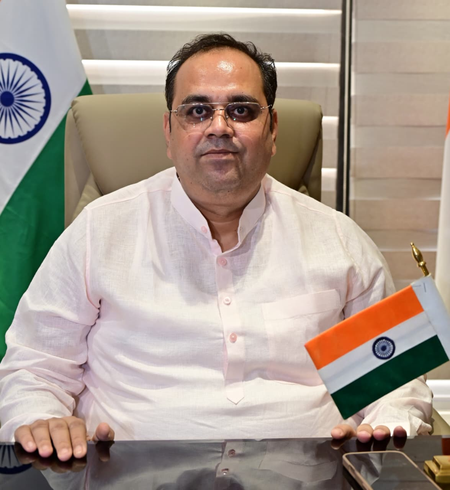
New Delhi, May 11 (IANS) Delhi Transport Minister Pankaj Kumar Singh said on Monday that the government has received nearly 700 responses to the Draft Delhi EV Policy 2026 during the public consultation process conducted over the last month.
The draft policy was placed in the public domain for 30 days, until May 10, to invite comments, feedback, and suggestions from all stakeholders, including the general public.
Pankaj Kumar Singh said, “The overwhelming response received from citizens, industry stakeholders, institutions, and experts reflects Delhi’s collective aspiration towards a cleaner, greener, and future-ready mobility ecosystem.”
He said the government is committed to formulating a progressive, implementation-oriented EV policy that accelerates the adoption of clean mobility while safeguarding environmental and public health interests.
In addition to inviting online and offline submissions, the Transport Department organised a series of extensive stakeholder consultation conferences with Original Equipment Manufacturers (OEMs) across two-wheelers, three-wheelers, four-wheelers, goods vehicles, and e-rickshaws, along with Charge Point Operators (CPOs), Battery Swapping Operators, Vehicle Scrappers, Battery Recyclers, DISCOMs, Fleet Aggregators, and other key stakeholders associated with the electric mobility ecosystem.
The consultations were conducted to ensure wider participation and meaningful deliberations on the proposed policy framework.
Of the total responses received, around 400 submissions came from the general public, including individual residents, vehicle owners, commuters, Resident Welfare Associations (RWAs), students, delivery riders, and gig workers.
Around 200 submissions were received from industry stakeholders, including OEMs, OEM associations, charge point operators, battery swapping operators, vehicle scrappers, battery recyclers, discoms, and fleet aggregators.
More than 50 responses were submitted by institutions such as schools, NGOs, think tanks, research institutions, universities, consulting organisations, environmental groups, international organisations, policy advisory bodies, trade associations, and civil society organisations.
The Government also received around a dozen submissions from various Government Departments, Ministries and statutory authorities, he said.
Suitable recommendations and practical inputs from stakeholders shall be incorporated wherever appropriate to make the policy more robust, inclusive, and implementation-focused, he said.
–IANS
rch/dan