
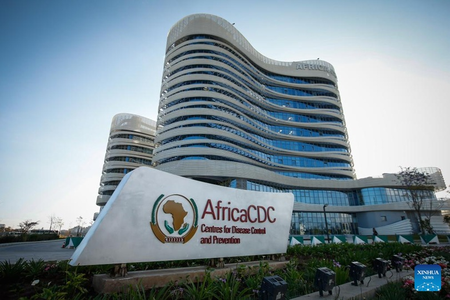
New Delhi, May 28 (IANS) India has dispatched emergency pharmaceutical supplies as part of efforts to contain the Bundibugyo Ebola outbreak in the Democratic Republic of Congo, according to the Africa Centres for Disease Control and Prevention (Africa CDC).
The Ethiopia‑headquartered Africa CDC said in a social media post that the consignment, donated by the Government of India, was received in Uganda by its Eastern Africa Regional Coordinating Centre and will be deployed to affected communities in eastern DR Congo.
The supplies comprise essential diagnostics, therapeutics, infection prevention and control materials, and case management support, the agency said.
“Africa CDC welcomes the arrival of emergency pharmaceutical supplies generously donated by the government and people of India to support the ongoing response to the Bundibugyo Ebola outbreak in the DRC,” the continental public health agency said.
It thanked India for its “continued support and commitment to protecting lives and advancing health security across the continent”.
WHO declared the ongoing Ebola situation in the region as a Public Health Emergency of International Concern on May 17.
Over 1,000 suspected infections and at least 220 deaths had been reported as of Tuesday, including seven confirmed cases in Uganda, though health agencies have warned the true scale may be higher.
The Bundibugyo strain, one of six known species of the Ebola virus, has caused periodic outbreaks since its identification in Uganda in 2007. The World Health Organization (WHO) has said there are currently no approved drugs or vaccines specifically for the Bundibugyo strain.
Ebola often turns into a fatal illness transmitted through direct contact with infected bodily fluids, contaminated materials or infected animals, with symptoms ranging from fever, vomiting, diarrhoea and, in severe cases, internal and external bleeding.
India has stepped up medical assistance to African countries in recent years, supplying medicines and vaccines particularly during public health emergencies such as the COVID‑19 pandemic.
—IANS
aar/ag