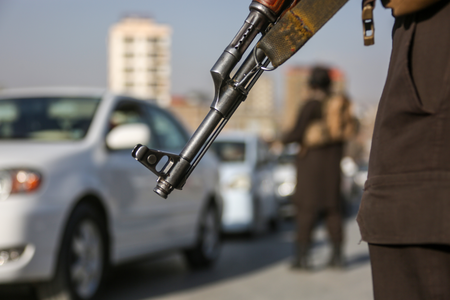
Kabul, June 20 (IANS) The rise in criminal incidents across Afghanistan is not a peripheral issue but a stark reflection of the Taliban’s governance failures. Having returned to power pledging to restore order and end chaos, the Taliban has instead presided over a reality marked by diminished freedoms, weakened justice, limited accountability, and persistent insecurity, a report has highlighted.
Afghanistan under the Taliban is not a “stable Islamic order” but a coercive and criminaliaed landscape where state violence is organised but public safety remains elusive. The regime can issue decrees, enforce punishments, and spend billions on security, yet it has failed to build trust, ensure fair justice, or adequately protect its citizens. Its claims of delivering justice but continue to preside over a persistent rise of murder, theft, and extortion across the country, according to a report in ‘Stringer Asia’.
“Nearly five years after the fall of Kabul, the regime that sold itself as the antidote to corruption, insecurity, and chaos is presiding over a country where criminality is visibly expanding. Homicides, armed robberies, thefts, assaults, extortion, and gang activity are being reported across Afghanistan, from Helmand to Badakhshan, from Herat to Kabul, and from Balkh to Parwan, Faryab, and Jawzjan,” the report detailed.
The reporter noted that Afghanistan remains under stringent media restrictions, making it likely that the true scale of the problem is far greater than scattered findings indicate. Yet even the figures released by the Taliban itself are sufficient to “puncture the myth” of stability.
“According to data published by the Taliban Interior Ministry in November 2025 and reported in January 2026, total criminal cases rose from 10,834 in the solar hijri year 1400, corresponding to March 2021-March 2022, to 17,320 in 1403, March 2024-March 2025. That is an increase of about sixty per cent since the Taliban returned to power. Murder cases rose from 1,502 to 1,734, an increase of more than fifteen per cent. Theft cases doubled, from 3,102 to 6,225,” Stringer Asia mentioned.
The report stressed that far from a marginal deterioration, these figures expose a state that claims to have restored security, while ordinary life becomes increasingly insecure. Such an outcome, it argued, is not failure by accident but by design.
“The Taliban’s security state is not built to protect society. It is built to control it. It is highly efficient when the target is a woman seeking education, a journalist asking questions, a former official, a protester, a musician, a civil society activist, or anyone who challenges the regime’s authority. It is far less effective when the threat comes from gangs, armed robbers, extortion networks, drug economies, or Taliban-linked actors operating under the cover of power. The state sees dissent more clearly than it sees crime, because dissent threatens the regime. Crime merely feeds the ecosystem around it,” the report emphasised.
–IANS
scor/as