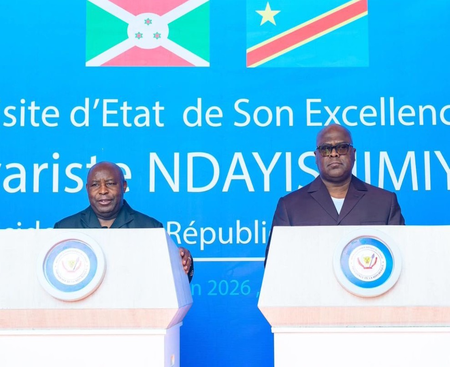
Kinshasa, June 23 (IANS) President of the Democratic Republic of the Congo (DRC) Felix Tshisekedi announced Tuesday that he would soon visit Ituri Province, the epicentre of the country’s latest Ebola outbreak, to follow up on response efforts.
“I will very soon go to Ituri Province, to the very sites of the outbreak, to personally follow up,” Tshisekedi said at a joint press conference with visiting Burundian President Evariste Ndayishimiye, who currently chairs the African Union, Xinhua news agency reported.
The announcement came after the two leaders attended a meeting of the national Ebola response task force in Kinshasa. Tshisekedi said the meeting had provided “a full update” on the epidemiological situation and the response measures being carried out by the DRC.
The latest outbreak, caused by the Bundibugyo strain of the Ebola virus, has continued to spread in the country’s conflict-affected east. According to the latest figures released by Congolese authorities, the DRC has reported 1,048 confirmed cases, including 267 deaths.
Tshisekedi said the DRC had mobilised health authorities, local communities, and national, African, and international partners to contain the outbreak, noting that health threats “ignore borders” and require stronger regional cooperation based on prevention, epidemiological surveillance, and rapid information-sharing.
Ndayishimiye expressed solidarity with the DRC and urged African countries and the wider international community not to close borders.
“We must show solidarity and manage this epidemic together,” he said, adding that Burundi had not closed its border with the DRC, but had instead taken preparedness and prevention measures in coordination with Congolese authorities.
The World Health Organisation (WHO) has said the outbreak remains concentrated in Ituri, while cases have also been reported in North Kivu and South Kivu provinces. The agency has also warned that insecurity, population displacement, and constraints on surveillance and response activities continue to complicate efforts to contain the disease.
–IANS
ksk/dan