
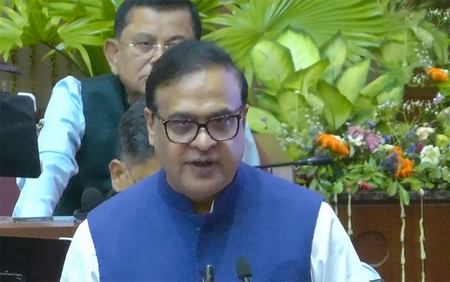
Guwahati, July 8 (IANS) Assam Chief Minister Himanta Biswa Sarma on Wednesday announced a major policy initiative to promote entrepreneurship, saying small, non-polluting enterprises in the state will no longer require government approvals to commence operations during their first three years.
The Chief Minister said the move is aimed at improving the ease of doing business by reducing regulatory hurdles and allowing entrepreneurs to focus on building their ventures instead of navigating bureaucratic procedures.
“We are making it easier to do business in Assam. Small, non-polluting enterprises can now commence operations without government approvals for the first three years. I want my entrepreneurs to focus on creating value, not chasing approvals,” CM Sarma said in a statement.
The announcement is expected to provide a significant boost to startups, micro, small and medium enterprises (MSMEs), and first-generation entrepreneurs looking to establish businesses in sectors that have minimal environmental impact.
A senior government official said that the initiative is part of the Assam government’s broader efforts to create a business-friendly ecosystem, attract investment and generate employment opportunities in the state.
Over the past few years, the state government has introduced a series of reforms to simplify business regulations, digitise government services and reduce the compliance burden on industries.
It has also been actively promoting Assam as an investment destination through initiatives such as the Advantage Assam summit and sector-specific industrial policies.
The latest decision is expected to reduce the time and cost involved in setting up eligible enterprises while encouraging greater private sector participation in manufacturing, services and other low-risk economic activities.
The government believes that easing entry barriers for small businesses will help foster innovation, strengthen local entrepreneurship and expand the state’s industrial base. Industry stakeholders are expected to welcome the decision, as regulatory approvals have often been cited as a major challenge for new businesses during their initial years of operation.
The state government is likely to issue detailed operational guidelines outlining the categories of enterprises eligible for the exemption and the compliance framework applicable after the initial three-year period.
–IANS
tdr/dpb