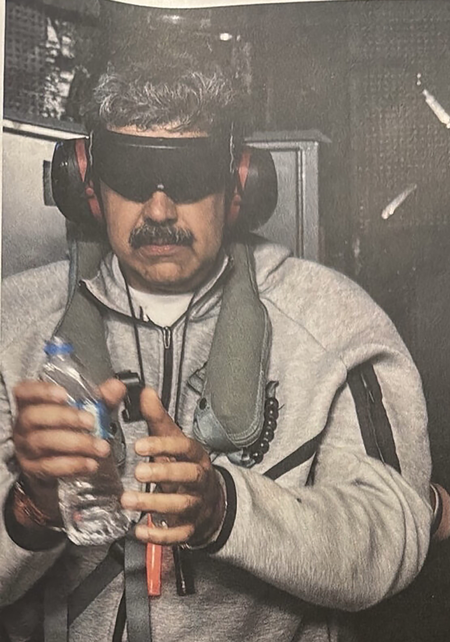
Washington, Jan 4, (IANS) The arrest of Venezuelan leader Nicolas Maduro by US forces marks a dramatic tactical moment, but former US officials and analysts are warning that the harder and more consequential phase now lies ahead, with major questions unresolved about governance, stability and democratic transition in Venezuela.
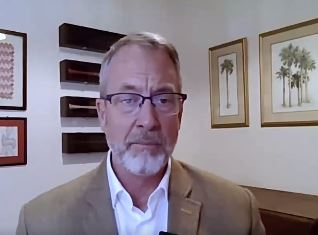
In opinion pieces published on MSNBC following Maduro’s removal, retired US Ambassador to Venezuela James Story described the operation as a “shocking tactical success,” while cautioning that such a victory does not automatically translate into strategic success.
Maduro, whom the United States and many countries have long described as an illegitimate president, was captured in a large-scale overnight strike in Caracas and is set to face criminal proceedings in New York. His removal, Story wrote, eliminates a central figure blamed for Venezuela’s economic collapse, mass migration and international isolation.
At the same time, the retired US diplomat Story warned that key pillars of the regime remain intact. Figures such as Interior Minister Diosdado Cabello Rondon and Defence Minister Vladimir Padrino Lopez, both long associated with the security apparatus, remain in Venezuela and retain control over armed forces and internal security structures.
Their continued presence, he argued, raises the risk that Maduro’s arrest amounts to removing “one head of a hydra,” rather than dismantling the system that sustained his rule.
One immediate concern, is internal stability. Cabello’s control over security services and armed civilian groups could deter public celebrations of Maduro’s removal, while the military’s remaining capabilities, including stockpiles of advanced weapons, pose risks if command and control break down.
According to the two columns that he wrote in the last 24 hours, another unresolved issue is governance. With Maduro gone, attention has turned to who holds power in Caracas and under what authority. US officials have publicly suggested working with Delcy Rodriguez, Venezuela’s executive vice president, as an interim leader.
But Story highlighted a central contradiction: if Maduro was illegitimate, his closest deputy, sanctioned by the United States and the European Union since 2018, would face the same legitimacy problem.
Rodriguez herself has rejected US authority, denouncing Maduro’s arrest as an “illegal and illegitimate kidnapping” and insisting that Maduro remains Venezuela’s president. That stance, Story wrote, underscores the uncertainty surrounding any transition managed without broad domestic or international consensus.
The columns also question whether the arrest advances democracy. While opposition figures such as Maria Corina Machado and Edmundo Gonzalez claimed victory in the disputed 2024 election, neither appears to have been incorporated into post-Maduro planning. Story warned that asking the opposition to once again wait on the sidelines risks deepening public cynicism after years of protests, negotiations and contested elections.
US officials have framed the operation as part of a broader strategy addressing drug trafficking, regional security and foreign influence. However, Story noted that the scale of US naval and air deployments suggested ambitions beyond counternarcotics, raising concerns that regime change was pursued without a clearly articulated end state.
President Donald Trump’s declaration that the United States plans to “run” Venezuela until a “safe, proper and judicious transition” further sharpened those concerns. Without substantial security forces on the ground, Story argued, it remains unclear how stability would be maintained in a country riddled with armed groups and institutional decay.
Oil has also emerged as a central theme. While restoring Venezuela’s energy sector is frequently cited as essential to recovery, Story cautioned that the return of foreign investment will be difficult if sanctions remain, the rule of law is weak and political authority is contested.
The retired US diplomat raises the question of the next phase, “And then what?” Maduro’s removal may have been necessary, Story wrote, but it is insufficient on its own. Without a credible pathway to democratic governance and institutional reform, the moment of change could prove fleeting for a population that has already endured years of dashed expectations.
–IANS
int/lkj/uk