Kabul, Feb 11 (IANS) The recent attacks in Balochistan highlight not only security challenges but also what critics describe as long standing political failures to address the province’s grievances as the roots of growing violence in the province go back to Pakistan’s independence, a report has highlighted.
An article in Afghanistan’s leading news agency Khaama Press mentioned that the recent attacks in Balochistan highlight not only security challenges but also what critics describe as long standing political failures to address the province’s grievances. Documented human rights concerns — particularly enforced disappearances and alleged extrajudicial killings — have created an environment where, according to activists, peaceful dissent faces criminalization and armed resistance appears to some as the only avenue for change.
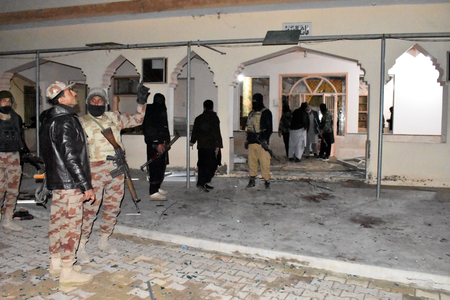
On January 31, the Baloch Liberation Army (BLA) launched ‘Operation Herof 2.0’, carrying out coordinated attacks in 12 districts, including Quetta, Gwadar and Mastung. According to official figures, 17 police personnel and 31 civilians were killed during the operation. Pakistani forces claimed that 145 insurgents were killed in retaliation while the BLA has disputed this statistics. The attacks carried out by BLA involved gun assaults, suicide bombings, and the temporary seizure of police stations and government facilities.
Reports have now surfaced about intensified security operations in Balochistan, sparking concerns among rights activists about treatment of local residents, Khaama Press reported.
“The recent violence in Balochistan represents not an isolated incident but a dramatic escalation in a conflict with roots stretching back to Pakistan’s independence. Understanding the crisis requires examining historical grievances, documented human rights violations, economic disparities, and what critics describe as political failures,” an opinion piece stated.
Balochistan accounts for 44 per cent of Pakistan’s land area but it comprises six per cent of the country’s total population. It remains Pakistan’s poorest province, with approximately 70 per cent of residents living in multidimensional poverty and unemployment at 33 per cent, despite the region possessing substantial natural resources, including the Sui gas fields that provide an estimated 35-40 per cent of Pakistan’s natural gas and significant copper, gold, and coal deposits.
The China-Pakistan Economic Corridor (CPEC), especially the development of Gwadar port, has also voiced concerns in Balochistan. Local residents have raised concerns regarding displacement and economic marginalisation, alleging exclusion from employment opportunities and decision-making processes linked to projects on their lands, the article in Khaama Press mentioned.
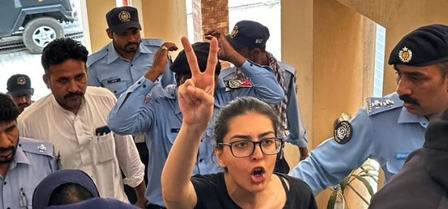
The most serious allegations in Balochistan are related to enforced disappearances and extrajudicial killings. Various human rights groups have termed what they described systematic abuses. The Baloch Yakjehti Committee (BYC) reported 1,223 cases of enforced disappearance in 2025. The Human Rights Council of Balochistan documented 1,455 cases in 2025, which included 1,443 men and 12 women. As per their findings, 1,052 people remained missing by year’s end while 317 were released, 83 were reported killed in custody and three were shifted to jail.
The BYC’s 2025 annual report revealed that 188 alleged extrajudicial killings occurred in Balochistan, with 75 linked to what activists termed as a “kill and dump” policy. Makran division and Awaran district were identified as particularly affected regions. Pakistani security forces maintain approximately 736 permanent checkpoints and 300 temporary ones in Balochistan, with critics stressing that this militarisation in the region reinforces perceptions of occupation instead of integration.
The Baloch insurgency has also witnessed participation of female suicide bombers. Female participation in armed resistance in patriarchal society holds symbolic weight. The recurring violence showcases what critics termed a fundamental failure of political engagement, according to the report.
“The Pakistani state has often treated demands for autonomy and equitable resource distribution as separatism, with dissent frequently labeled as anti-state activity. The provincial government in Balochistan, which some view as federally installed, has struggled to address local grievances effectively. Rather than dialogue, security-focused responses have intensified, with some analysts arguing this approach has pushed educated urban youth toward insurgency. Political observers emphasise that military solutions cannot resolve what they view as fundamentally political problems rooted in marginalization, economic exploitation, and rights concerns,” the article concluded.
–IANS
akl/as