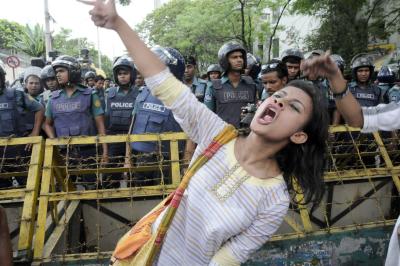
Dhaka, Feb 2 (IANS) Bangladesh is witnessing a striking paradox as the right-wing radical groups in the country depict feminism as a “Western agenda”. At its core, women’s rights activism in non-Western regions cannot be dismissed as an imported Western idea, especially when Western societies have themselves subjected women to persistent discrimination and oppression, a report said on Monday.
“Feminist politics in Bangladesh emerged from women’s issues within local contexts, embedded in material realities that included dowry-related violence and murders, domestic abuse, child marriage, acid attacks, extra-judicial punishments imposed through shalish and fatwa, barriers to women’s education, discriminatory inheritance practices, violations of indigenous women’s rights, and many other local struggles,” a report in Bangladesh’s leading newspaper ‘The Daily Star’ detailed.
“It is important to remind ourselves that women in the West have also long been victims of patriarchy and oppression, and have fought for their rights. However, this does not mean that women in non-Western regions are simply copying them when they oppose mistreatment. The irony that must be recognised is that women all over the world are no strangers to gender inequality and abuse in their own regional contexts. This shared reality of women does not make the political activism of non-Western women a mimicry of the West,” it added.
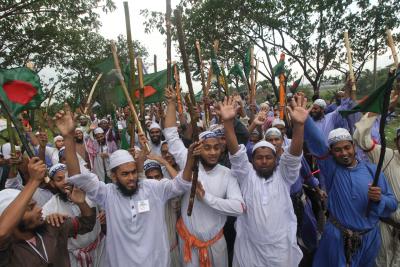
According to the report, following the July 2024 demonstration in Bangladesh, conservative right-wing groups have repeatedly described feminist activism as a “Western” act and called for its complete boycott.
It emphasised that the recent radical right-wing campaign in Bangladesh, which defaces posters of former Bengali social reformer Rokeya Shakhawat Hossain with derogatory words and publicly labels prominent feminist leaders as “beshha” (prostitutes) at political gatherings, does not constitute a critique of feminism. Instead, it is a deliberate strategy aimed at delegitimising feminist activism through intimidation and threat.
“It stems from the same historical masculine rage that opposed women’s voting rights, sought to keep women as second-class citizens, denied them access to education, and maintained social control by constructing women as inferior. Any woman or ideology that challenged this structure has historically been perceived as a threat to them. It is therefore important to situate these extreme radical campaigns within a longer history of gendered power formations that have organised violence, exclusion, and control over women in post-colonial Bangladesh,” the report noted
–IANS
scor/as