New Delhi, July 18 (IANS) Bangladeshi government acknowledged that the country’s graduation from the United Nations’ Least Developed Country (LDC) category this year could worsen an already fragile economy, a new report has said.
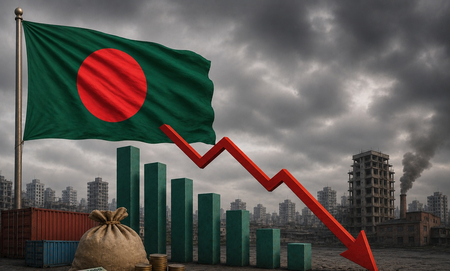
Due to high inflation, falling exports, and rising energy and fertiliser bills over the Middle East crisis, Bangladesh has asked for a three‑year extension to prepare for the loss of trade preferences, the report from Bangladesh-based The Daily Star said, citing a finance ministry document.
The government prepared the document ahead of the meeting of the UN Economic and Social Council (ECOSOC) next week. The graduation would remove International Support Measures (ISMs) that have been critical to exports and pharmaceuticals, deepening economic vulnerability.
The report said that a team, led by Commerce Minister Khandakar Abdul Muktadir, is already in New York to persuade other nations to support Bangladesh’s bid to extend its graduation schedule.
Further, the country is also facing export losses after signing of Free Trade Agreements (FTAs) between Bangladesh’s competitors and the European Union and the United Kingdom.
The US Trade Representative (USTR) is also conducting investigations on Bangladesh that could lead to restricting imports of products made with child and forced labour through additional duties.
The UN Committee for Development Policy (CDP) had earlier recommended approving Bangladesh’s request to defer its graduation from the least-developed country (LDC) category from November 2026 to November 2029. The recommendation now awaits formal ratification by the UN General Assembly.
“The finance ministry said investor confidence has weakened due to political instability in recent years and will take time to restore,” the report noted.
The ministry also acknowledged the need for more time to conclude FTA negotiations with trading partners to reduce the risks of losing preferential market access.
“Bangladesh’s economy, which grew over 6 per cent annually in the five years before 2021, has since slowed. Inflation has remained above 8 percent since 2022, while poverty is projected to rise in 2025, pushing more people into extreme poverty,” the report noted.
—IANS
aar/ag