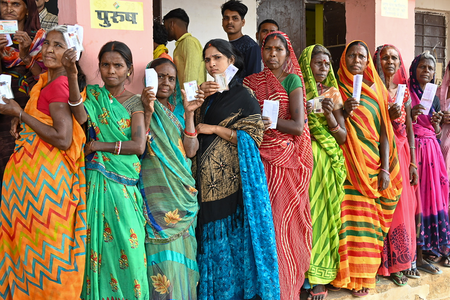
New Delhi, Jan 6 (IANS) The Special Intensive Revision (SIR) of electoral rolls in Uttar Pradesh has brought to light the scale of changes underway in the state’s voter database, with nearly one out of every five electors found to be untraceable or otherwise ineligible during field verification.
According to the draft rolls published on January 6, a total of about 15.44 crore electors were on the rolls as of October 27, 2025, of which around 2.89 crore, or 18.7 per cent, fall under the category of uncollectable forms.
According to the date shared by the Election Commission, permanent migration has emerged as the single biggest reason for deletions. This accounts for more than eight per cent of the total electorate.
Analysts say that fast urbanisation and population movement have significantly affected cities and the districts close to them.
Lucknow tops the list at more than 30 per cent uncollectable cases, followed by Ghaziabad at nearly 29 per cent and Balrampur at 25.98 per cent. Kanpur Nagar is also on the higher side with 25.5 per cent uncollectable cases. Meerut, Prayagraj, Gautam Buddha Nagar and Agra have also recorded high levels of deletions. This highlights the outcome of floating populations, rented accommodation and frequent address changes.
Untraceable or absent electors account for a little more than five per cent statewide, while deaths make up close to three per cent of the total.
Districts such as Sitapur, Gonda, Shahjahanpur and Balrampur have reported comparatively higher death percentages.
Experts are of the view that this figure clearly indicates the gaps in timely updation of records by the local civil registration authorities.
Similarly, cases of voters already enrolled elsewhere form another significant category. This phenomenon is marked especially in fast-growing urban centres where duplication is more common, say officials.
In contrast to other areas of Uttar Pradesh, parts of the Bundelkhand region, including Lalitpur, Hamirpur and Mahoba, have shown relatively lower levels of discrepancy.
Uncollectable percentages in these districts are close to or below the 12 per cent mark.
Election officials attribute this to lower migration rates and more stable populations.
Officials of the Election Commission have stressed that the figures are part of a draft exercise and not final deletions.
Citizens whose names appear in the uncollectable category will be given an opportunity to file claims and objections during the stipulated period.
The Election Commission has already announced to conduct special camps to facilitate those seeking inclusion after furnishing the requisite documents.
Similarly, intensified verification drives would also be conducted to ensure that no eligible voter is left out while strengthening the integrity of the electoral rolls ahead of the 2026 electoral cycle.
–IANS
brt/khz