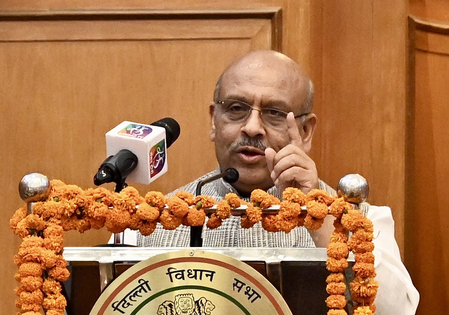
New Delhi, June 6 (IANS) Delhi Assembly Speaker Vijender Gupta said on Saturday that Bhagwan Shri Birsa Munda occupies a unique and inspiring place in India’s history.
Addressing a National Seminar on ‘Bhagwan Shri Birsa Munda, Cultural Renaissance in Tribal India and His Representation in Museums’, Gupta said that Birsa Munda, revered as Dharti Aaba, was not merely a freedom fighter but a symbol of self-respect, cultural identity, and social awakening.
His legacy reminds us that protecting rights and preserving culture are inseparable, said Gupta.
Organised by the Museums Association of India, the seminar brought together museum professionals, historians, archaeologists, scholars, and researchers to deliberate on the enduring legacy of Bhagwan Shri Birsa Munda, the cultural renaissance in tribal India, and the role of museums in preserving and presenting tribal heritage.
Addressing the gathering, Gupta said that Bhagwan Shri Birsa Munda’s movement represented not only resistance to colonial rule but also a determined effort to protect cultural identity, traditional institutions, and indigenous ways of life.
He observed that at a time when tribal communities faced economic exploitation, social disruption, and the erosion of established traditions, Bhagwan Shri Birsa Munda inspired a renewed sense of dignity, self-belief, and cultural consciousness.
According to him, the cultural renaissance associated with Bhagwan Shri Birsa Munda lay in restoring confidence among tribal communities in their own history, knowledge traditions, and cultural values, demonstrating that the protection of rights and the preservation of culture are intrinsically linked.
Highlighting the richness of India’s tribal heritage, Gupta said tribal communities possess a remarkable legacy of oral literature, folk traditions, music, art, ecological knowledge, and social practices developed over generations.
He noted that these traditions are not merely memories of the past but living cultural expressions that continue to enrich India’s social fabric.
The Speaker further observed that tribal communities have long served as custodians of forests, biodiversity, and sustainable modes of living, making their knowledge systems particularly relevant in an era marked by environmental challenges and rapid technological change.
Despite these contributions, he said, many tribal histories and freedom struggles remained insufficiently represented in mainstream narratives for decades.
Welcoming efforts to honour tribal freedom fighters, commemorate Janjatiya Gaurav Diwas, and document tribal heritage, he described them as important steps towards building a more inclusive understanding of India’s history.
–IANS
rch/dan