New Delhi, Jan 30 (IANS) As India gears up to table the Union Budget 2026-27 in Parliament on February 1, investors are likely to be focused on the debt metrics, deficit outcome and scheduled borrowings for the next year Budget to align with strategic objectives, a report showed on Friday.
The size of borrowings will be an important consideration for the bond markets, said a note by DBS Bank.
“Given our underlying math and deficit target, we expect FY27 net borrowings to rise to Rs 12 lakh crore (vs Rs 11.4 lakh crore in FY26), which amounts to 73 per cent of the deficit next year. Assuming redemptions at around Rs 4.5 lakh crore (factoring in potential switches), gross borrowings are likely to rise to a fresh high of Rs 16.5 lakh crore,” explained Radhika Rao, Executive Director and Senior Economist at DBS Bank.
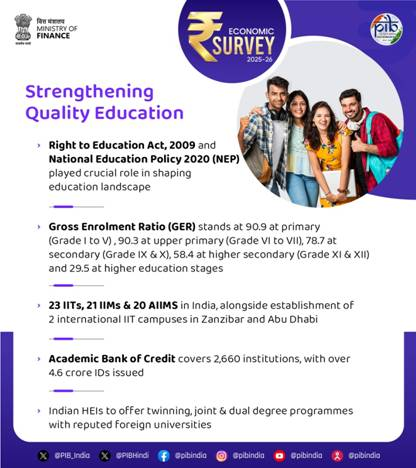
The Economic Survey 2025-26 presented a comprehensive assessment of the economy, projecting FY27 growth at 6.8-7.2 per cent from 7.4 per cent this year, higher than street estimates.
Geopolitics and global uncertainty emerged as defining themes of the report, outlining three scenarios of various risk intensity. While these forces pose clear risks to India, the Survey underscored the imperative of strengthening domestic fundamentals to cushion against external shocks — recognising that the global environment may yet deteriorate.
According to the note, gross supply might be lowered in Budget if more switches are planned to push out part of FY27 maturities for longer-out tenors, though this needs to be balanced with the prevailing tepid demand for duration papers.
“The FY28 maturities stand at Rs 6 lakh crore, which might be lowered through switches in the coming year. A significant wall of supply ahead would contribute to further hardening in INR bond yields, with the 10Y at a year’s high above 6.7 per cent,” said the report.
Separately, the statistics agency published expert group recommendations for the upcoming revision of the CPI base year to 2023-24 from current 2011-12.
First CPI release under the revised and rebased series is due on February 12. The balancing exercise will lower weightage of the food and beverages component (from 45.86 per cent to 36.75 per cent) and reallocate that towards services (ex-education), to align with the change in consumption patterns.
“Based on the new weights and if indices are kept unchanged, the new CPI will have increased slightly by 20-25bp, while the reverse will have held during periods of higher food inflation,” said the report.
—IANS
na/