Jamnagar (Gujarat), Feb 2 (IANS) The Central Government has announced the creation of regional medical hubs to promote Medical Value Tourism (MVT) and strengthen the AYUSH ecosystem. For this to be a reality, the government’s focus is on quality healthcare, research, employment generation and global outreach.
Presenting the Union Budget on February 1, 2026, Union Finance Minister Nirmala Sitharaman outlined a series of transformative measures aimed at positioning India as a global hub for Medical Value Tourism while enhancing the international footprint of traditional Indian systems of medicine.
As part of the initiative, the proposed regional medical hubs will house AYUSH centres, Medical Value Tourism facilitation centres, and state-of-the-art infrastructure for diagnostics, treatment, post-treatment care and rehabilitation. The hubs are expected to significantly improve patient experience for both international and domestic visitors, while also creating large-scale employment opportunities for doctors, allied health professionals (AHPs) and other healthcare workers.
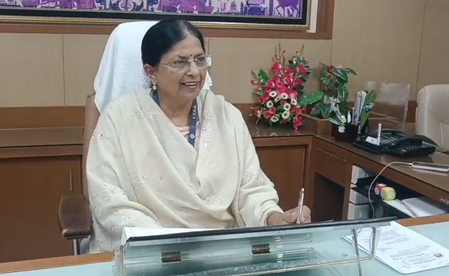
Welcoming the announcements, Prof. Dr Tanuja Nesari, Director of the Institute of Teaching and Research in Ayurveda (ITRA), Jamnagar (Gujarat), thanked the government for the increased budgetary support to the AYUSH sector.
“We are grateful to the Government of India for announcing a nearly 20 per cent increase for the AYUSH system and for strengthening India’s commitment to global traditional medicine through the WHO,” Dr Nesari said.
A key highlight of the budget is the decision to upgrade the WHO Global Traditional Medicine Centre (GTMC) in Jamnagar, which functions under the Ministry of AYUSH. The upgrade is aimed at enhancing evidence-based research, training and global awareness of traditional medicine systems.
Dr Nesari described the budget initiatives as “truly groundbreaking,” noting that they would help India meet growing global demand for AYUSH services.
“The proposed initiatives will strengthen quality education, clinical care and research through the establishment of three new All India Institutes of Ayurveda,” she said. “The upgrade of AYUSH pharmacies and drug testing laboratories will ensure high standards of quality, certification and availability of skilled manpower.”
She further added that the expansion of the WHO Global Traditional Medicine Centre would reinforce India’s leadership in traditional medicine on the world stage.
India’s global standing in traditional healthcare has seen a steady rise in recent years. Yoga received worldwide recognition after being taken to the United Nations by Prime Minister Narendra Modi, while Ayurveda has gained renewed global acceptance in the post-COVID era.
The increasing international demand for AYUSH products has also benefited medicinal plant farmers, as well as youth engaged in processing and value addition.
According to officials, the new initiatives aim to integrate traditional practices with modern healthcare frameworks, enhance India’s soft power and establish the country as a trusted global destination for holistic and evidence-based healthcare.
Expressing appreciation for the government’s support, stakeholders in the AYUSH sector thanked Prime Minister Narendra Modi, Finance Minister Nirmala Sitharaman, Union AYUSH Minister Prataprao Jadhav, and AYUSH Ministry Secretary Padma Shri Rajesh Kotecha for what they termed “encouraging and forward-looking announcements” for Ayurveda and the broader AYUSH ecosystem.
–IANS
brt/uk