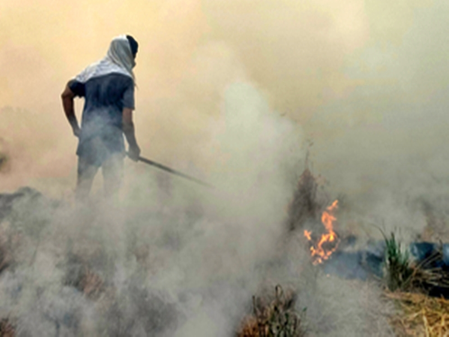
New Delhi, Dec 18 (IANS) The Commission for Air Quality Management (CAQM) has issued a set of stringent, time-bound directions to strengthen Municipal Solid Waste (MSW) management across the National Capital Region (NCR), warning that persistent gaps in waste handling and open burning continue to aggravate winter air pollution .
Following a comprehensive review involving NCR state governments, municipal bodies and pollution control boards, the Commission flagged enforcement failures, delays in legacy waste remediation and inadequate segregation as key concerns.
CAQM underlined that, despite available infrastructure, open burning of municipal waste and biomass remains a recurring problem with direct implications for public health.
In Delhi, the Municipal Corporation of Delhi (MCD) has been directed to complete remediation of 143.09 lakh metric tonnes of legacy waste by December 2027, at a mandated processing pace of around 3.5 lakh metric tonnes per month.
The Commission ordered immediate augmentation of waste processing facilities, enhanced surveillance at garbage-vulnerable points, spill-free transportation and intensified door-to-door segregation drives.
Bulk Waste Generators have been asked to ensure on-site wet waste processing within one month, while the Delhi Pollution Control Committee will carry out strict monitoring of waste-to-energy plants and submit monthly compliance reports.
In Haryana’s NCR districts, including Gurugram, Faridabad and Sonipat, CAQM noted significant delays in biomining and infrastructure creation.
Gurugram has been asked to complete tendering for the remediation of 14 lakh metric tonnes of legacy waste by January 20, 2026, while Faridabad must identify land for decentralised processing units within two months and operationalise them by April 2026.
Uttar Pradesh NCR cities such as Noida, Greater Noida and Ghaziabad were pulled up for uneven segregation and coordination gaps.
Authorities have been barred from seeking further extensions for commissioning processing facilities and instructed to ensure 100 per cent end-to-end segregation.
In Rajasthan’s NCR towns of Bharatpur, Alwar and Bhiwadi, progress was found inadequate, prompting directions for faster remediation, surveillance and expansion of zero-waste colonies.
CAQM said it will closely monitor implementation, conduct follow-up reviews and take action against defaulting agencies, reiterating that waste management remains central to controlling NCR’s air pollution crisis.
–IANS
sas/dan