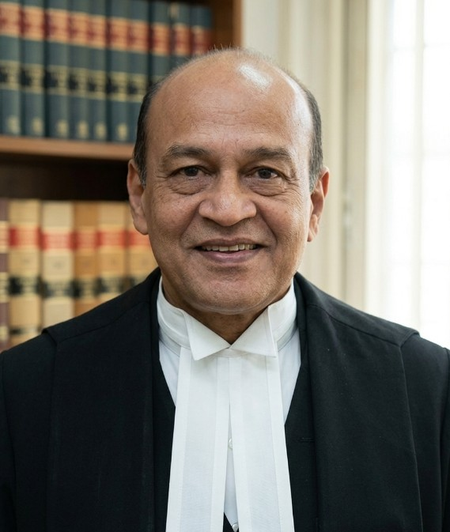
New Delhi, April 10 (IANS) Justice Yashwant Varma of the Allahabad High Court has withdrawn from the ongoing inquiry proceedings instituted against him, alleging grave procedural irregularities, denial of a fair opportunity to defend himself, and a “complete absence” of evidence linking him to the alleged discovery of burnt currency at his official residence.
In a detailed communication addressed to the inquiry committee on Thursday, Justice Varma said he was constrained to write “with profound anguish and a heavy heart”, asserting that the case against him rested on presumptions rather than evidence.
The controversy stems from a fire incident on March 14, 2025, at his official residence in Delhi during his tenure as a judge of the Delhi High Court, where videos recorded by firefighters purportedly showed the presence of burnt currency in a storeroom.
Justice Varma said he was “constrained to conclude” that the proceedings rested merely on the undisputed existence of a storeroom within the premises and the allegation that cash was found there, without any foundational evidence establishing his culpability.
“I would be doing myself and the institution the greatest disservice by continuing to participate in the present proceedings, thereby legitimising a process that calls upon me to answer the unanswerable — where did the money come from,” he stated, announcing his withdrawal with immediate effect.
Justice Varma claimed that the burden of proof had been impermissibly reversed, requiring him to disprove “assumed facts and innumerable presumptions” despite the prosecution failing to establish even a prima facie case. “This has resulted not only in a reversal of the burden of proof as we commonly understand but also in placing upon me the onerous obligation of proving multiple negatives,” he said.
Justice Varma maintained that no evidence had been led to show that the alleged cash discovered in the storeroom belonged to him or was placed there with his knowledge or consent. “No charge was ever made, and no evidence whatsoever was led to show that any cash was placed in the storeroom by me or at my instance,” he said.
Detailing the circumstances of the March 14, 2025, fire incident, Justice Varma reiterated that he was not present at the premises at the time and had no knowledge of the alleged cash until after the incident. He said that the storeroom in question was a detached structure, accessible from an unmanned rear gate and routinely used by domestic staff and maintenance personnel.
“It defies ordinary logic and common sense to suggest that I would have chosen such a location to store ‘cash’,” Justice Varma said. Raising serious objections to the conduct of the inquiry, Justice Varma highlighted that the selective reliance on material from a prior in-house committee (IHC) probe, alleging that exculpatory evidence, including the statutory fire report, which made no mention of cash, was excluded without explanation.
He further claimed that several key witnesses, including senior officials from the Delhi Fire Services and Delhi Police, were dropped after cross-examination revealed inconsistencies in the case against him.
Raising further concerns about the fairness of the proceedings, Justice Varma alleged that key evidence — including CCTV footage — was withheld despite repeated requests. “This best evidence that could shed light on the entire incident has been kept away,” he said, adding that even requests for a cloned copy were declined.
“The conclusion in the CFSL Extraction Report, that data from the CCTV hard drive could not be accessed, is highly suspect,” he stated, adding that the DVR itself was never subjected to forensic examination.
On the charge of tampering with evidence, Justice Varma said there was “simply no material” to suggest that he or anyone acting on his behalf interfered with the scene. He stated that decisions not to seize or report the alleged cash were taken by senior officials before he was even informed about the fire.
Similarly, he rejected allegations of giving an “evasive explanation”, asserting that he had consistently maintained that the cash did not belong to him or his family and that they had no knowledge of its presence. “The charge evidently proceeds on a misreading of my letter,” he said.
Expressing “profound disappointment” with the conduct of the inquiry, Justice Varma said the proceedings had failed to adhere to principles of fairness and due process. “A rational and fair inquiry would have recognised the complete absence of a prima facie case,” he remarked.
Meanwhile, in a parallel development, Justice Varma has tendered his resignation with immediate effect to President Droupadi Murmu, bringing an abrupt end to his tenure amid ongoing impeachment proceedings.
In his resignation letter, he said, “I do not propose to burden your august office with the reasons which have constrained me to submit this missive,” adding that “it is with deep anguish” that he was stepping down. “It has been an honour to serve in this office,” the letter read.
A copy of the resignation was also marked to the Chief Justice of India, Surya Kant.
Justice Varma has been at the centre of controversy since burnt cash was allegedly discovered on March 14, 2025, at his official residence during his tenure as a judge of the Delhi High Court.
Impeachment notices backed by 145 Lok Sabha members and 63 Rajya Sabha members were moved in July 2025, leading to the constitution of an enquiry committee under the Judges (Inquiry) Act, 1968.
Earlier this year, the Supreme Court rejected a plea filed by Justice Varma challenging the Lok Sabha Speaker’s decision to constitute the enquiry committee.
Pronouncing the operative part of the verdict, a Bench of Justices Dipankar Datta and Satish Chandra Sharma of the apex court held: “We hold that the petitioner is not entitled to any relief in the present case.”
Justice Varma had questioned the constitution of the enquiry panel on procedural grounds, contending that impeachment notices moved simultaneously in both Houses required joint consultation between the Lok Sabha Speaker and the Rajya Sabha Chairman before constituting the probe committee.
Justice Varma had earlier also challenged the findings of a three-member in-house enquiry committee constituted by the Supreme Court, which concluded that he exercised “secret or active control” over the cash allegedly recovered from the premises.
The apex court dismissed that challenge as well, concluding that the in-house procedure was “fair and just” and did not compromise judicial independence.
Based on the in-house enquiry report, then Chief Justice of India (CJI) Sanjiv Khanna had recommended initiation of removal proceedings, leading to the constitution of a parliamentary enquiry committee
–IANS
pds/uk