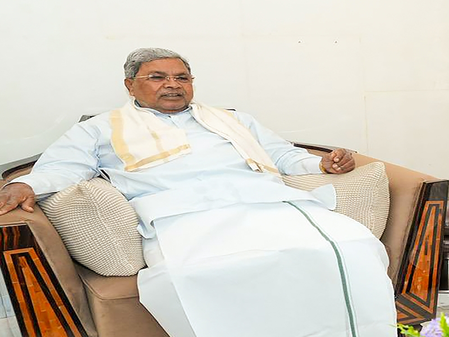
Bengaluru, Dec 13 (IANS) Karnataka Chief Minister Siddaramaiah raised a concern that casteism is more prevalent among the educated and appealed that this must end.
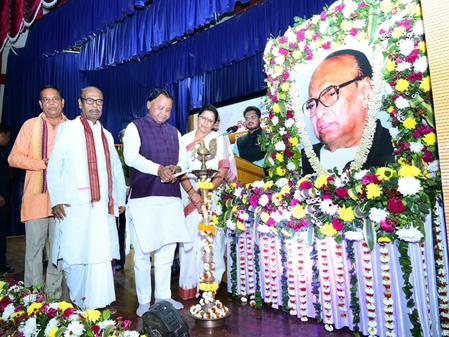
He was speaking after participating in the Bharat Ratna Prof. C.N.R. Rao 10th Annual Science Outreach Programme-2025, in Lakshmeshwar in Gadag district.
“Social reformer Basavanna said as far back as 850 years ago, ‘Do not ask who he is.’ Even after 79 years of Independence and achieving 76 per cent literacy, casteism has not disappeared. In fact, casteism is seen more among the educated, and this must end,” the Chief Minister appealed.
He said the purpose of education is to inculcate a scientific temper and rational thinking. “Unless inequality is eliminated and educated people give up blind practices, it will not be possible to build a truly humane society,” he said.
“We have implemented the Anti-Superstition Act. It is unfortunate that even today, in the land of Basavanna, superstitions continue to be practised. Superstition and blind practices must be eradicated. The Constitution enshrines fraternity, liberty and equality. Unless these values are implemented in letter and spirit, neither the caste system nor inequality will disappear. Education is essential to develop one’s personality as a human being,” he said.
“All religions preach humanity, but vested interests are misinterpreting religion. Instead of resigning oneself to fate during difficult times, anyone from any section of society can achieve success through willpower and hard work. Education is not confined to any one class. With honest effort and by making proper use of opportunities, one can reach great heights. The objective of science is to adopt a scientific temper and rational thinking,” he said.
Recalling his association with former bureaucrat B.S. Patil during official tours when Patil served as Chief Secretary, the Chief Minister said Patil came from a farming family, pursued education, joined the Army, and later became an IAS officer.
“Despite meeting with an accident, his strong will enabled him to clear the IAS examination. He retired as Chief Secretary and worked with integrity, showing deep concern for the development of the state,” Siddaramaiah said.
He added that Patil worked extensively as Principal Secretary to former Chief Minister late J.H. Patel.
“J.H. Patel was highly intelligent, and B.S. Patil ensured that work was carried out efficiently without creating pressure. During J.H. Patel’s tenure as Chief Minister, a committee headed by Patil was formed to examine the division of Bengaluru. Even now, a committee under his chairmanship has submitted a report, leading to the division of Greater Bengaluru into five corporations. Patil has rendered immense service to the state, and it is appropriate that the Chandan Educational Institution has chosen to honour him,” he said.
Describing Prof. C.N.R. Rao as one of the rarest scientists India has produced, Siddaramaiah said Rao studied in the Kannada medium up to SSLC, while B.S. Patil studied in the English medium. “C.N.R. Rao rose to the highest levels in science. Research was his life, and his wife was a great source of support to him,” he said.
Recalling that India’s first Prime Minister Jawaharlal Nehru had emphasised the need for everyone to develop a scientific temper, Siddaramaiah said every Indian student must cultivate scientific and rational thinking. India is a country of many castes and religions, and we must build a secular and egalitarian society.
–IANS
mka/pgh