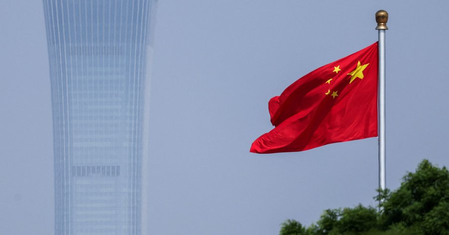
New Delhi, June 17 (IANS) China’s growing footprint in Spanish ports has caused concerns among security experts of the European Union, especially after a Chinese state‑owned carmaker chose a site near a Ferrol naval base in Galicia, a new report has said.
The report from Euractiv said experts fear that commercial infrastructure near key naval facilities could serve military or intelligence purposes in future.
Port of Ferrol hosts key headquarters of the Spanish Navy and national shipbuilder Navantia and serves as a key strategic location for NATO operations and SAIC Motor plans to build industrial facilities right at the access point used by Spanish warships.
The report cited Alberto Camarero Orive, a port security and logistics expert at Madrid’s Polytechnic University, who felt Ferrol to be a highly sensitive strategic zone because of its naval facilities, Navy operations, and NATO ties.
“In a scenario of international crisis, geopolitical tension, or hybrid conflict, a port terminal can become a point of vulnerability,” he told the media house, calling for a strict precautionary approach.
The development follows Chinese shipping giant COSCO’s 2017 acquisition of a majority stake in Spanish container terminal operator Noatum, which gave the company control of critical terminals in Valencia and Bilbao.
Further, the company gained control of two inland rail terminals in Madrid and Zaragoza, and most recently, Tarragona, around 100 km south of Barcelona.
Camarero noted that Chinese companies can plug into global shipping networks and secure their supply chains by controlling key Spanish terminals. Further, it boosts China’s connectivity with Europe and provides valuable “bargaining power” over shipping lines, shippers, and regulators.
The EU Commission is preparing guidelines to help EU capitals assess third‑country influence over port operations.
The report said that EU’s 27 transport ministers had welcomed the Commission’s Ports Strategy last week, raising the need “to avoid undue foreign ownership or control of critical port infrastructures and operations.”
—IANS
aar/pk