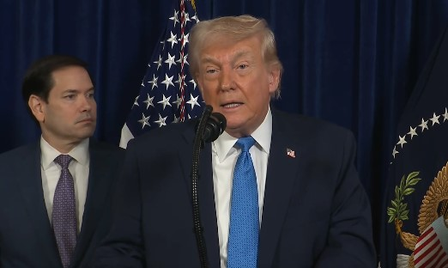
New Delhi, Jan 5 (IANS) US President Donald Trump’s statement that the United States of America was now going to “run the country”, adding that American companies would rebuild Venezuela’s battered oil industry, continues to dominate news headlines with Washington’s media digging for details.
And soon after the weekend Caracas raid, Trump indicated that Washington could further increase tariffs on Indian goods if it did not stop buying Russian oil.
The US has already applied additional punitive duty on India over a “reciprocal tariff” over this issue.
The West has been critical of New Delhi for buying discounted Russian seaborne crude, claiming it helped Moscow fund the war in Ukraine, despite many European nations still sourcing Russian energy.
The two apparently unconnected incidents merge at one point — oil.
On March 24 this year, President Trump issued an executive order directing the Secretary of State Marco Rubio to identify countries that could face an extra 25 per cent tariff on all goods imported into the United States if they import oil from Venezuela.
“On or after April 2, 2025, a tariff of 25 per cent may be imposed on all goods imported into the United States from any country that imports Venezuelan oil, whether directly from Venezuela or indirectly through third parties,” the executive order said.
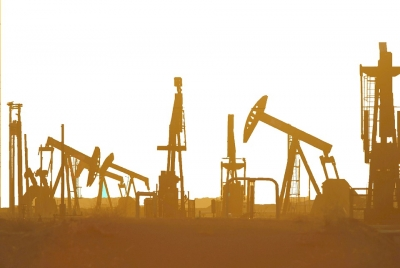
Reports suggest that despite holding the world’s largest oil reserves, Venezuela, last year accounted for less than one per cent of global supply.
This is largely being attributed to lower spending from Caracas due to government policies and sanctions.
As Trump himself has pointed out, pumping up extraction may cost billions of dollars.
Additionally, refining Venezuelan crude is expensive.
Thus, the question remains how can the companies make a handsome profit.
Once under American control, and sanctions removed — including physical blockades by US forces — the oil may start flowing across seas to other countries, but it may be at international prices, not discounted.
China, accounting for more than half of Venezuela’s crude exports at more than 400,000 barrels per day (bd) in 2025 (year to date), as per data from analytics firm Kpler, may stand to lose in case of a shift in export policy.
US waivers on sanctions allow India to import small volumes, which is just about 30,000 bd.
Unlike Russia, Venezuela could not manage to re-route crude to alternative markets.
Other countries like Spain, Cuba, Italy, Singapore, Vietnam, etc., also import Venezuelan oil, though in smaller or less consistent volumes.
US recent moves on Venezuela, Russia, China, and India — though not similar in execution — are overwhelmingly shaped by energy imperatives.
It is using sanctions, trade controls, military pressure, and targeted cooperation to reshape global energy leverage in different ways.
Washington has repeatedly targeted Venezuelan oil firms and tankers to choke revenue streams when President Nicolas Maduro was in power.
All through, it was signalling readiness to reshape Venezuela’s hydrocarbon sector, a dynamic that would alter global heavy‑crude flows and affect buyers such as India.
Indian refiners and state oil firms stand to gain or lose depending on how US pressure and possible restructuring play out, with reports noting potential recovery of long‑pending dues and resumption of Venezuelan supplies if Washington’s control eases sanction constraints.
Following the Ukraine war, US sanctions have been calibrated to degrade oil and LNG revenue streams by targeting producers, traders, and the maritime networks that carry Russian crude.
With China, Washington’s policy is less about crude and more about critical minerals and industrial inputs that power clean‑energy and defence supply chains.
Meanwhile, the US treats India as both a market for energy cooperation and a strategic partner to diversify supply chains.
Initiatives such as the Strategic Clean Energy Partnership and recent moves to deepen civil‑nuclear and critical minerals cooperation illustrate Washington’s intent to align New Delhi on resilient, low‑carbon energy pathways while offering alternatives to Russian and Middle Eastern supplies.
New Delhi’s passage of the SHANTI Bill and commercial ties reflect converging energy security interests.
–IANS
jb/khz