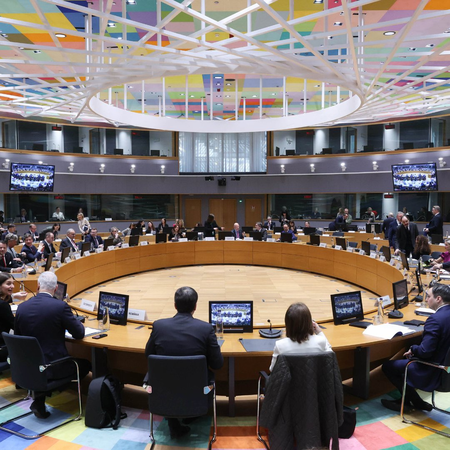
Brussels, May 22(IANS) The Council of the European Union (EU) announced on Friday a one-year suspension of customs duties on key nitrogen-based fertilisers such as urea and ammonia, aiming to alleviate the impact of the Iran war on EU farmers.
The nearly complete closure of the Strait of Hormuz has disrupted about one-third of global fertiliser trade, driving up prices sharply. In April, the Food and Agriculture Organisation of the United Nations warned that a prolonged blockade could trigger an agrifood catastrophe.
The measure is expected to save EU farmers and the fertiliser industry about 60 million euros (69.6 million US dollars) in import duties, according to the Council’s statement, Xinhua news agency reported.
The tariff suspension does not apply to fertiliser products imported from Russia or Belarus. The measure will take effect on the day after its publication in the EU’s Official Journal.
Currently, the EU already imports large volumes of fertilisers duty-free from countries with preferential access, but a significant volume still enters with tariff rates ranging from 5.5 to 6.5 per cent.
To balance the interests of EU producers, the Council said the tariff exemption will be subject to a quota, set at the volume of most-favoured-nation imports in 2024 plus 20 per cent of the volumes imported from Russia and Belarus in the same year.
In 2024, the EU imported 2 million tonnes of ammonia and 5.9 million tonnes of urea, mainly used for nitrogen-based fertiliser production. Additionally, the bloc imported 6.7 million tonnes of nitrogen-based fertilisers and mixtures containing nitrogen.
Earlier this week, the European Commission adopted the Fertiliser Action Plan: an initiative to support farmers facing rising fertiliser costs and scarcity, reinforce domestic production and reduce Europe’s dependency on imports.
President of the European Commission, Ursula von der Leyen, said: “With this Action Plan, we are investing in a stronger European fertiliser industry, supporting European farmers and accelerating innovation in sustainable, home-grown solutions. The ongoing fossil fuel crisis shows that climate leadership and economic resilience are interlinked. This is why Europe is building a future based on sustainability, affordability and industrial strength.”
–IANS
ksk/as