Prayagraj, Jan 19 (IANS) A new chapter was added to the history of the Magh Mela this year as environmental conservation emerged as a central theme for the first time. Under the leadership of Panchtattva Foundation, a dedicated ‘Panchtattva Paryavaran Karyalaya’ was set up in the Mela area in Prayagraj. This was a move to highlight the deep interconnection between water, forests, and life.
The initiative highlighted a meaningful shift towards integrating environmental awareness with spiritual traditions.
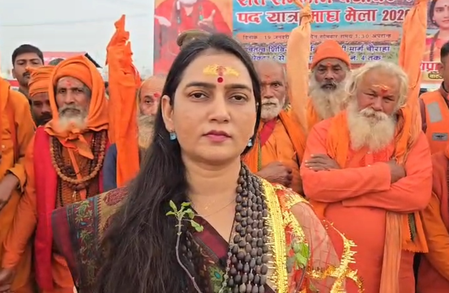
As part of this effort, a unique ‘Panchtattva Paryavaran Padyatra’ spotlighting water conservation was organised. The march drew saints, seers, devotees, and the general public into a collective movement for ecological responsibility. The march was led by renowned environmentalist and water conservationist Shipra Pathak, popularly known across the country as the “Water Woman.”
Starting from the Panchtattva Paryavaran Shivir on Harshvardhan Marg and proceeding to Ganga Ghat near Bridge No. 4, Shipra Pathak walked alongside hundreds of dandi sadhaks and saints. Through this symbolic and spiritual journey, a strong message was conveyed—that spirituality and environmental protection are inseparable and must go hand in hand.
This initiative stood out for its reflective and reformative approach amid the Magh Mela on Mauni Amavasya, which was getting tremendous attention due to processions and debates linked to rituals and bathing practices.
Shipra Pathak urged devotees to introspect. She asked a fundamental question: if the waters of the Triveni Sangam are not kept clean and protected, how will the traditions of Kalpavas, Magh Mela, and Mahakumbh survive in the future?
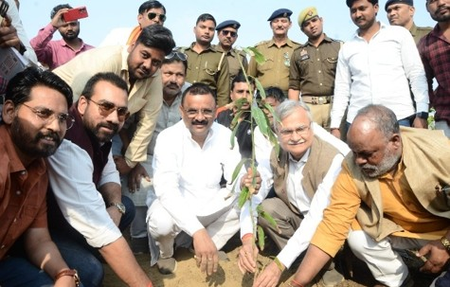
Saints and sadhaks continued to hold saplings in their hands during the march. This presented a powerful visual of faith connected with responsibility towards generations to come.
Pilgrims who attended the Magh Mela also joined Shipra Pathak’s ambitious “One Crore Tree Plantation Pledge.” Tulsi saplings were distributed among devotees. The distribution was aimed at highlighting the cultural and spiritual importance of nature conservation in the tradition of India.
After reaching the Ganga Ghat, saints performed a holy dip. They appealed to devotees not to use polythene. They also urged people to help maintain cleanliness at the ghats.
The saints said that the Ganga is not merely a river but also a mother who gives life. They further maintained that protecting the purity of the Ganga is the moral duty of every devotee. Plastic waste and pollution harm not only the environment but also religious faith itself, they added.
Mahadev Guru Ji, manager of Peepleshwar Mahadev, showered praise on Shipra Pathak’s work for the protection of the environment. He called the move mandatory for future generations. Guru Ji warned that if water conservation is not taken seriously today, future conflicts could arise over water scarcity. He also assured full support to the Panchtattva Foundation’s mission.
Bhairav Math’s Mahant Swami Shringeri Maharaj echoed the sentiment with the slogan “Jal hai to kal hai” (If there is water, there is a future), announcing complete support from his Akhara for the water conservation movement. He stressed that the role of saints should extend beyond rituals to active participation in safeguarding society and nature.
Expressing gratitude to saints, journalists, and devotees, Shipra Pathak said the overwhelming support for water conservation had strengthened her resolve. “If there is no water in the Triveni, the very idea of the Magh Mela and Mahakumbh will cease to exist,” she said. Pathak urged people to make water conservation a part of their daily lives.
She further asserted that making the ghats polythene-free is not solely the responsibility of the government or administration, but a collective duty of the millions of devotees who visit the sacred site. Pathak further said, keeping the Ganga and Triveni clean is entirely achievable if everyone shares the responsibility.
The padyatra began with Vedic chants recited by students of a Gurukul. They were all accompanied by the sound of conch shells. All this created a spiritually charged atmosphere. Many women participants also joined the march. The message of environmental protection got strengthened due to huge participation. Hundreds of Panchtattva volunteers and devotees participated in it.
More than just an event, the Panchtattva Paryavaran Padyatra delivered a powerful message: protecting faith requires protecting nature. Without conserving water, forests, and land, cultural traditions cannot survive.
Shipra Pathak’s initiative will be remembered as a landmark moment in the history of the Magh Mela—one that sought to transform environmental awareness into a mass spiritual movement.
–IANS
brt/uk