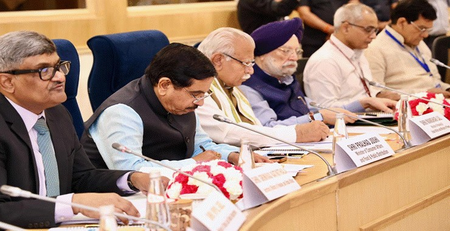
New Delhi, March 28 (IANS) Union Minister Manohar Lal on Saturday outlined key priorities, including institutionalisation of single-window approvals, integration of PNG infrastructure into urban planning, facilitation of last-mile connectivity and convergence with ongoing urban development initiatives.
Addressing a review meeting here, he underscored the critical role of cities as engines of economic growth and called for mission-mode implementation to accelerate PNG expansion.
An ambitious target of providing 50 lakh new PNG connections was also highlighted, according to the Ministry of Housing and Urban Affairs.
The meeting brought together key stakeholders to deliberate on accelerating PNG network expansion across urban India and ensuring uninterrupted delivery of essential services.
A detailed presentation by the Ministry of Petroleum and Natural Gas outlined the current status of PNG rollout, emphasising its advantages over LPG in terms of safety, reliability, affordability and environmental sustainability.
Key challenges identified included delays in municipal permissions, Right of Way (RoW) approvals and high restoration charges, which continue to impede timely network expansion.
Union Minister Hardeep Singh Puri highlighted the evolving global energy landscape and stressed the importance of strengthening PNG infrastructure to enhance energy security and resilience. He encouraged States and Urban Local Bodies (ULBs) to actively promote PNG adoption, particularly in areas where infrastructure is already available.
Union Minister Pralhad Joshi emphasised the need to maintain uninterrupted essential supplies, curb misinformation, and prevent black marketing of fuel.
He advised states to strengthen monitoring and vigilance mechanisms and to encourage consumers to transition from LPG to PNG wherever feasible, with priority given to public institutions such as schools and colleges.
Deliberations during the roundtable highlighted several best practices, including fast-tracking of road-cutting permissions and adoption of deemed approval mechanisms to expedite project implementation.
State representatives shared their experiences and emphasised the importance of enhanced coordination among Urban Development Departments, Municipal bodies, and Food and Civil Supplies Departments for seamless implementation.
There was broad consensus on facilitating a phased and structured transition from LPG to PNG in areas with existing infrastructure, supported by adequate consumer awareness and safeguards to prevent disruption of essential services.
–IANS
na/