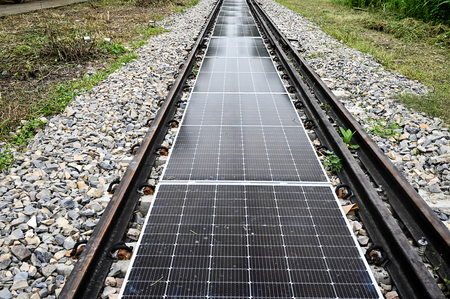
New Delhi, Feb 28 (IANS) India’s energy journey is no longer defined by a single source as the country is now drawing strength from solar parks, rooftop solar panels, hydrogen pilots, modernised nuclear frameworks, smart meters, and digital platforms.
Improved power availability has been a key outcome of the ongoing reforms. The average electricity availability in rural areas has increased from 12.5 hours in 2014 to 22.6 hours, while urban areas now enjoy up to 23.4 hours of power supply, up from 22.1 hours in 2014.
These improvements reflect significant progress in the reliability and reach of electricity services across the country, according to an official factsheet released on Saturday.
Today, India is among the world’s top three energy consumers, and electricity demand continues to grow every year. The total electricity generation increased from 1,739.09 Billion Units (BU) in 2023–24 to 1,829.69 BU in 2024–25, a growth of 5.21 per cent. For 2025–26, the generation target has been set at 2,000.4 BU.
This shift is being shaped by clear government initiatives, from scaling renewable energy and launching the National Green Hydrogen Mission, to modernising nuclear laws through the Sustainable Harnessing and Advancement of Nuclear Energy for Transforming India (SHANTI) Act, strengthening energy efficiency, reforming power distribution, and building digital energy infrastructure, the official statement explained.
India’s evolving energy spectrum is not about abandoning the old overnight. It is about carefully building the new, step by step, so that the country can power growth, improve livelihoods, and move towards its long-term commitment of achieving Net Zero emissions by 2070.
Meanwhile, according to the International Renewable Energy Agency (IRENA)’s Renewable Energy Statistics 2025, India ranks fourth globally in total installed renewable energy capacity.
Solar energy, in particular, has seen rapid growth; installed solar capacity rose from 3 GW in 2014 to 140 GW in January 2026. This increase has helped push non-fossil fuel capacity beyond 50 per cent of total installed electricity capacity.
Wind energy also plays a substantial role: India’s cumulative installed wind capacity reached about 54.65 GW by January 2026, contributing significantly to the renewable mix and strengthening grid diversification alongside solar. Together, solar and wind account for a dominant share of India’s clean energy capacity.
Government programmes have supported this scale-up across households, agriculture, infrastructure, and manufacturing. The PM Surya Ghar scheme has enabled 23.9 lakh households to install rooftop solar systems, adding 7 GW of distributed clean energy capacity.
Pradhan Mantri Kisan Urja Suraksha Evam Utthan Mahabhiyan Scheme (PM-KUSUM) promotes solarisation in agriculture, reducing diesel dependence and stabilising farm energy supply.
The scheme aims to instal 14 lakh standalone pumps (by 31.03.2026), promoting clean rural energy use.
As many as 55 solar parks across 13 states have been approved with a sanctioned capacity of nearly 40 GW, accelerating large-scale deployment.
The Production Linked Incentive (PLI) Scheme, with an outlay of ₹24,000 crore, is strengthening domestic solar manufacturing and reducing import dependence.
India has also set a target of producing 5 million metric tonnes (MMT) of green hydrogen annually by 2030 under the National Green Hydrogen Mission (NGHM), launched in 2023.
The Mission is expected to attract over ₹8 lakh crore in investments and reduce fossil fuel imports by more than ₹1 lakh crore. This will avoid nearly 50 MMT of greenhouse gas emissions annually by 2030.
To support this scale-up, the government has approved an outlay of ₹19,744 crore till FY 2029–30, including ₹17,490 crore under the SIGHT programme, which provides incentives for domestic electrolyser manufacturing and hydrogen production.
Implementation is already underway with the commissioning of India’s first port-based green hydrogen pilot project.
India’s present nuclear capacity stands at 8.78 GW. With new reactors under development, capacity is projected to rise to 22.38 GW by 2031–32. The Government has further announced a long-term Nuclear Energy Mission with a vision of achieving 100 GW by 2047, aligning nuclear expansion with India’s clean energy and energy security goals, the statement added.
–IANS
sps/rad