Jakarta, Jan 1 (IANS) In the wake of floods and landslides in Aceh, West Sumatra and North Sumatra that have claimed more than 1,100 lives and left many residents without homes, food or a sense of security, a broad network of assistance has taken shape, stretching from small community kitchens to large-scale volunteer initiatives across the country.
Britania Sari, one of the initiators of the relief efforts, has just returned to her home in Bogor, West Java, after overseeing the dispatch of six trucks carrying clothes, water filters, medicines, sleeping mats, mosquito nets and retort food to the disaster-hit areas.
She began mobilising aid independently on December 2, 2025, after posting an appeal on social media. The call quickly drew responses from volunteers and institutions in different regions.
“We divided the tasks: volunteers in the affected areas mapped the needs of evacuees, while those of us outside focused on fundraising,” Britania told Xinhua news agency recently.
Ready-to-eat retort food has become a key form of assistance. Packaged rice, tubers, vegetables and animal- and plant-based proteins are easy to distribute, have a long shelf life and can be consumed without cooking.
According to Britania, the conditions in disaster-stricken parts of Sumatra have made raw food largely unusable, as many residents have lost cooking equipment, access to clean water and communal kitchens. She said lessons learned from previous disasters, such as the eruption of Mount Semeru, showed that retort food was among the most practical options for survival.
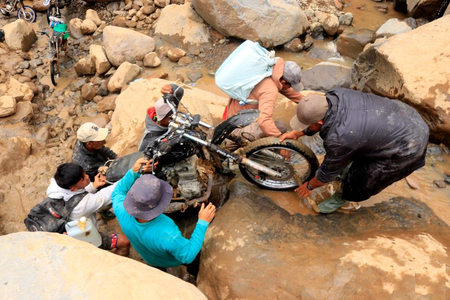
Delivering aid, however, has been challenging due to the vast affected areas and damaged transportation infrastructure. The six trucks have reached dozens of major relief points in Padang, Langsa, Lhokseumawe and Gayo Lues regencies, where local volunteers redistributed supplies to more remote locations.
Close coordination was required to prevent aid from piling up in one area while other communities were left unattended. In remote regions such as Gayo Lues, some supplies had to be transported by helicopter with limited carrying capacity.
Britania said public support has been overwhelming, yet still insufficient. Many isolated communities remain difficult to reach, and a large number of evacuees have lost their livelihoods.
Although she has returned to Bogor, donations continue to arrive. On Tuesday, she helped unload another truck carrying water purification equipment, clothing and food, while additional supplies are scheduled to be shipped by sea in cooperation with the Indonesian Red Cross.
In January 2026, Britania and other volunteers plan to focus on building sanitation facilities, as such infrastructure remains limited while hundreds of thousands of people continue to live in evacuation tents.
Solidarity has also come from small businesses. In the “student city” of Yogyakarta, Muflih Kholidin, owner of Warung Makan Nusantara, a food stall, has been providing free meals to students from affected regions who have lost access to basic logistics.
“We are committed to helping them until their hometowns recover and their parents can rebuild their livelihoods,” Muflih said.
More than 20 menu options are offered daily, and the food stall has become a space for sharing stories, where laughter, tears and relief are exchanged around dining tables. Some students recount homes buried in mud, rice fields destroyed and families still displaced.
For Muflih, listening to their stories is as important as serving warm rice. At times, he personally delivers dozens of ready-to-eat meal packages to students’ boarding houses.
He believes modest kitchens like his can act as bridges of empathy between those who have suffered and those eager to help.
Despite lingering mud and a slow recovery, these collective social initiatives stand as a vivid testament to the depth of solidarity embedded in Indonesian society.
–IANS
/as