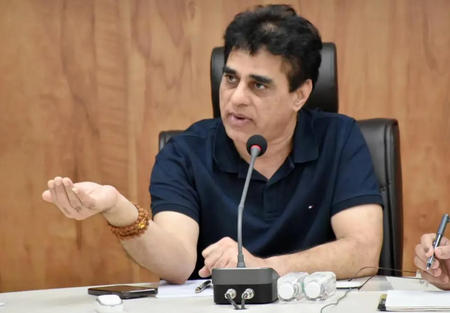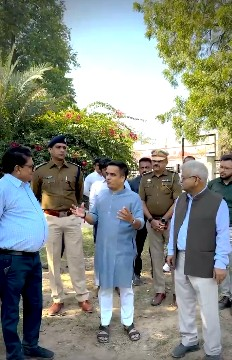
Ahmedabad, Dec 7 (IANS) Gujarat Deputy Chief Minister Harsh Sanghavi visited the redeveloped Gandhi Ashram site on Sunday to review the progress of the ongoing project, government officials said.
During the visit, officials from the Ahmedabad Municipal Corporation and the Mahatma Gandhi Sabarmati Ashram Memorial Trust presented detailed updates on various components of the redevelopment.
The Deputy Chief Minister examined the presentation, assessed the current status of the work and offered necessary guidance.
He then inspected several key locations within the redeveloped Ashram complex, including Das Aurdi, Rangshala, Somnath Chhatralay, Vanak Parivar Chali, Ashramshala, Kutumb Niwas, the old kitchen, Cheemanbhai Family Residence, Imam Manzil, Anand Bhavan Museum, Gaushala, Teachers’ Quarters, Udyog Mandir, Manav Sadhana, Balmandir, and newly constructed facilities such as vehicle parking, a cafetaria area, a souvenir shop and the ‘Mohan to Mahatma’ section.
The review meeting was attended by I.P. Gautam, Chairman of the Executive Council of the Mahatma Gandhi Ashram Memorial Trust; I.K. Patel, Officer on Special Duty of Mahatma Gandhi Sabarmati Ashram Memorial Trust; senior officials of the Mahatma Gandhi Sabarmati Ashram Memorial Trust; officials from the Ahmedabad Municipal Corporation; and representatives from other departments.
The Gandhi Ashram in Gujarat holds deep historical and national significance as the nerve centre of India’s freedom movement and the place where Mahatma Gandhi lived, worked and shaped many of his core ideas.
The Gandhi Ashram, established in 1917 on the banks of the Sabarmati in Ahmedabad, served as Mahatma Gandhi’s headquarters during some of the most defining years of India’s freedom struggle.
It was from this ashram that Mahatma Gandhi shaped movements like the Non-Cooperation, Khadi, and Harijan campaigns, and most famously launched the 1930 Dandi March that ignited nationwide civil disobedience against British rule.
The ashram functioned not only as Gandhi’s residence but also as a community experimenting with his principles of non-violence, self-reliance, simplicity and collective living.
Over time, it became a symbol of moral resistance and a crucial centre of political planning, social reform and national mobilisation, leaving an enduring imprint on India’s path to Independence.
–IANS
janvi/khz