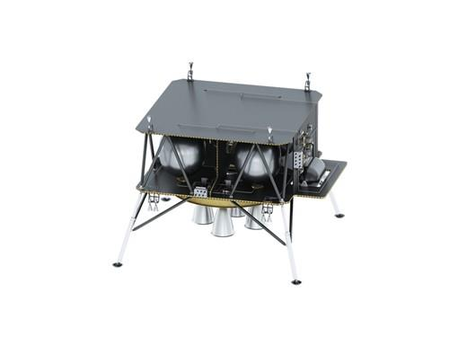
Seoul, Dec 29 (IANS) Hanwha Aerospace has won a $71.5 million (103.3 billion-won) contract to develop the propulsion system for South Korea’s first-ever lunar lander planned for launch in 2032, the company said on Monday.
Under the contract with the state-run Korea Aerospace Research Institute, Hanwha Aerospace will be responsible for producing, assembling, and testing key propulsion components, including the engine and attitude control thrusters, through 2032, Yonhap news agency reported.
The South Korean aerospace and defense giant has developed key spacecraft propulsion systems for the country’s space projects since the launch of the Arirang-1 multipurpose satellite in 1994.
The company said technologies and infrastructure developed through the lunar lander project could later be applied to future space exploration missions.
A Hanwha Aerospace official said the company aims to contribute to securing South Korea’s independent lunar exploration capabilities by leveraging more than 30 years of experience in the field.
Earlier this month, Korea AeroSpace Administration (KASA) shared plans to launch a lunar communication orbiter in 2029 and a lunar lander in 2032 as part of its long-term space exploration road map, Yonhap reported.
KASA Administrator Yoon Young-bin said the agency will attempt the 2029 orbiter mission using the country’s homegrown Nuri rocket.
Last month, the country successfully completed the fourth launch of the homegrown space launch vehicle, placing 13 satellites into orbit.
He explained that securing deep-space communications technology through the lunar communication orbiter will serve as groundwork for the goal of sending an unmanned lunar lander in 2032.
A lunar communications orbiter is essential for moon missions, as communication with Earth from the far side of the moon is not possible.
According to Young-bin, KASA plans to conduct at least one Nuri launch per year through 2032 to raise its success rate to over 90 per cent, and develop a reusable next-generation launch vehicle by 2035.
–IANS
rvt/