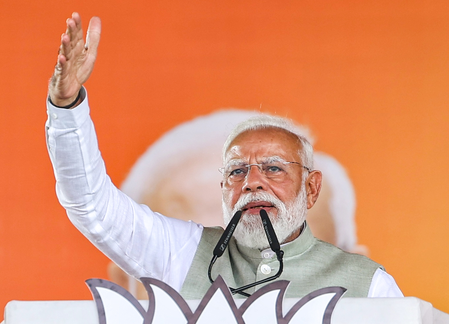
New Delhi, March 19 (IANS) Prime Minister Narendra Modi on Thursday wrote to the people of Uttar Pradesh, Uttarakhand, Madhya Pradesh, Chhattisgarh, Bihar, Jharkhand, Himachal Pradesh, and Delhi on the auspicious occasion of Chaitra Navratri and the New Year, marking the beginning of Yugabda 5128 and Vikram Samvat 2083.
In a letter addressed to citizens, the Prime Minister extended his greetings, stating, “Dear fellow citizen, on the sacred and auspicious occasion of the New Year and Chaitra Navratri, I extend my heartfelt greetings to you and your family.”
Highlighting the importance of the day, he said, “This auspicious day of Chaitra Shukla Pratipada is an important reference point in our ancient and scientific system of timekeeping. Today, we begin the new Yugabda year 5128 and the new Vikram Samvat year 2083. This traditional calendar stands as a testament to our vibrant and living cultural vitality spanning thousands of years.”
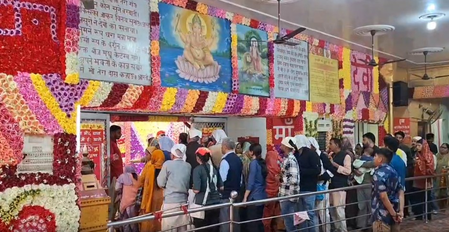
Emphasising the spiritual essence of the festival, the Prime Minister noted that Chaitra Navratri is observed over nine days and offers an opportunity for both devotion and self-discipline.
“For the next nine days, we also celebrate Chaitra Navratri. This festival provides us an opportunity not only for devotion and spirituality, but also for sacrifice and self-control. Many devotees give up food, comforts and conveniences, walking the path of restraint and discipline,” PM Modi added.
Describing the cultural and philosophical significance of Navratri, he said, “Navratri is also a festival dedicated to the worship of the nine diverse forms of Maa Shakti. It reflects the Upanishadic philosophy of is, which enables us to perceive the Divine in multiple forms. It is this vision that establishes India as the ‘Mother of Democracy’ and makes ‘Unity in Diversity’ our natural ethos.”
The Prime Minister further said, “During these nine days of Navratri, I pray to Maa Adi Shakti for the welfare of all citizens.”
The festival begins with Ghatasthapana, also known as Kalash Sthapana, marking the commencement of the nine-day worship of Goddess Durga. The ninth day, celebrated as Ram Navami, marks the birth of Lord Rama and the conclusion of the festivities.
The history of the celebration of Navratri can be traced to the mythology of the Hindu religion. One of the most popular mythological stories told during the celebration of Navratri is the story of the victory of the Goddess Durga over the demon king Mahishasura. According to the mythological story, Mahishasura had sought a boon to make himself almost invincible. He began to terrorise heaven and earth. The gods decided to create a powerful deity named Goddess Durga.
This deity was powerful and had divine energy. She went into a fierce battle against Mahishasura for nine nights. On the tenth day, she defeated Mahishasura. This marked the victory of good over evil. This was the reason for the celebration of Navratri. Thus, the celebration of Navratri can be seen as a celebration of courage, righteousness, and the power of divine energy.
–IANS
jk/dpb