
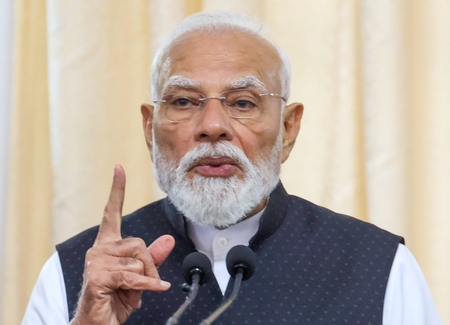
New Delhi, June 30 (IANS) A high-level meeting called by Prime Minister Narendra Modi with Secretaries of all Central government ministries and departments began here at Seva Teerth on Tuesday, with a focus on a comprehensive discussion on the reform agenda, as the government pushes for next-generation administrative and economic reforms.
The focus areas are expected to include ease of doing business, digital governance, deregulation, and last-mile delivery.
Apart from the Cabinet Secretary, the meeting is attended by the two Principal Secretaries to the PM — P.K. Mishra and Shaktikanta Das, along with Secretaries of all key departments.
This is one of the first full-Secretary-level interactions with the PM in the current fiscal (FY27), seen as a signal to align the bureaucracy with key policy priorities for the second half of 2026.
The meeting focuses on advancing the government’s vision of a ‘Viksit Bharat’ by simplifying regulations, promoting ‘Atmanirbhar Bharat’, and enhancing administrative efficiency across ministries and departments.
The meeting marks the Prime Minister’s second comprehensive interaction with the country’s top civil servants.
Discussions are expected to centre on the government’s flagship reform agenda, particularly measures to further improve the Ease of Doing Business and Ease of Living. Senior officials are also likely to present updates on structural reforms, assess implementation progress and identify areas requiring greater attention to ensure timely execution of key policy initiatives.
The review assumes added significance as the Centre has recently launched the ambitious “52 Reforms in 52 Weeks” initiative across several ministries, including Railways, with clearly defined implementation timelines. Prime Minister Modi has consistently emphasised the importance of achieving measurable outcomes within stipulated deadlines, making periodic reviews a crucial component of the government’s governance.
The meeting is expected to provide an opportunity for ministries to assess progress, address implementation challenges, and strengthen coordination to accelerate reforms that improve public service delivery, reduce regulatory burdens, and enhance the ease of doing business for industries, as well as the ease of living for citizens.
–IANS
na/vd