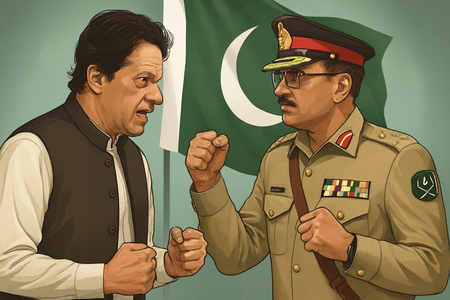
New Delhi, Dec 3 (IANS) A developing outcry over the reported mistreatment of incarcerated former Prime Minister Imran Khan may prove to be the proverbial last straw that broke the camel’s back for a country already facing multiple uprisings and a dwindling coffer.
Khyber Pakhtunkhwa, bordering Afghanistan, is already witnessing tribal unrest and alleged terror attacks. People in adjoining areas, like Pakistan-occupied Jammu and Kashmir and Balochistan, are up in arms, asking for basic facilities, protesting repression, even seeking secession.
Adding to its woes, the militia that Islamabad gave birth to fight former Soviet forces in Afghanistan has taken control of Kabul and has refused to bow to any browbeating, answering every Pakistani attack with its own.
The Pakistan-Afghan border remains volatile, with trade suspended for almost two months.
Meanwhile, Islamabad’s total public debt climbed close to USD 287 billion as of June 2025, showing almost a 13 per cent jump over the previous year, according to the country’s Finance Ministry.
The debt-to-GDP ratio had risen to about 70 per cent. While domestic debt saw a 15 per cent growth, external debt increased by six per cent. The official financial data has underscored Pakistan’s growing debt burden. The high external debt, low foreign‑exchange reserves, and weak growth have combined to pose Islamabad a severe balance‑of‑payments and fiscal squeeze.
Pakistan is also pursuing a multi‑pronged bailout strategy with an IMF programme backed by bilateral assurances from China, Saudi Arabia and the UAE, short‑term disbursements, and debt restructuring talks.
The dispute between Pakistan’s federal administration and Imran Khan’s family has escalated from complaints over restricted jail access and public accusations into mass protests and a possible political showdown.
The recent brief visit by his sister Uzma to meet Khan in prison and subsequent details of the former cricketer’s conditions led to an escalation in confrontation between the family and their followers with the administration, particularly against Pakistan Army chief Asim Munir.
It is to be seen whether, if at all, the state will initiate a formal inquiry that could force a legal or institutional response. If not, the Khan-led Pakistan Tehreek-e-Insaf (PTI) party – especially in Khyber Pakhtunkhwa – will translate anger and grievance into further escalation through protests, legal petitions, or electoral mobilisation.
Khyber Pakhtunkhwa (KP) has become the epicentre of the stir, being a strong PTI political base. Provincial leaders with their coordinated protests, legal petitions, and public messaging have kept Imran Khan’s plight in the headlines.
KP forced federal authorities to respond to both security and political pressures. The provincial government’s posture and the scale of street mobilisation have made the region a strategic challenge for the federal administration, prompting discussions about extraordinary measures like dissolving the local government and implementing central rule.
Across the country, authorities reacted with restrictions on gatherings, curfews in key cities, and heavy security deployments around the Rawalpindi jail housing Khan, and at the court hearing his case in Islamabad.
The iron fist has fed PTI narratives of suppression and helped sustain turnout and intensity at protests. The cycle of protest and clampdown has now converted the issue into a high‑stakes public confrontation between PTI’s grassroots networks and state institutions.
Meanwhile, repeated threats of confrontation with neighbouring states by the civil and military bosses and internal skirmishes over a globally known sportsman and political leader being subjected to mental torture are attracting increased diplomatic attention and may complicate Pakistan’s foreign relations.
The current confrontation underscores a deeper structural problem in Pakistani politics with the persistent ambiguity over the boundary between civilian authority and military influence, and the way personal animosities can become proxies for institutional battles – as it has happened in the past.
–IANS
jb/dan