New Delhi, Feb 11 (IANS) With the United States, China, and Russia creating a hostile world, Europe and Canada have no choice but to deepen ties with India, according to an article in Washington-based online publication ‘The National Interest’.
“Caught between de-risking China and hedging against American volatility, Europe has turned to India as a strategic alternative. India offers scale without China’s level of geopolitical and normative baggage. It is not a substitute for the US security umbrella, nor a replica of China’s manufacturing ecosystem, but it represents a viable third pole in an increasingly fragmented global economy,” states the article written by Dr Jianli Yang.
The article highlights that Canada faces the same situation as Europe. This is reflected in Prime Minister Mark Carney’s cautious outreach to China aimed at diversifying partnerships and reducing exposure to unilateral shocks from the USA. And yet keeping space to manoeuvre between Washington and Beijing.
Despite strained Canada-India relations in recent years, driven by diplomatic and security disputes, Ottawa may realistically follow Europe’s path and treat India as a pragmatic hedge.
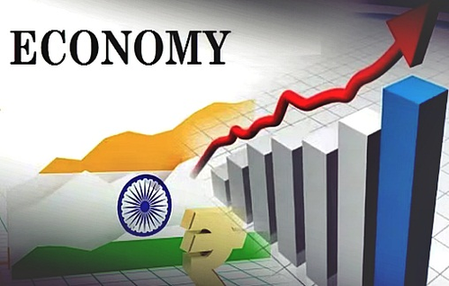
With Europe and India signing a trade agreement, the United States and India reaching a framework deal, and “Canada potentially moving in the same direction, an unintended architecture is emerging. India is becoming a bridge—commercial, strategic, and political—connecting both sides of the Atlantic”, the article states.
India is seen as fitting into this role as the country is rapidly expanding its manufacturing base, attracting investment that has been relocated from China as companies diversify their supply chains. Most iPhones sold in the United States are now made in India, a symbolic marker of global realignment. India also combines relatively low labour costs with improving legal infrastructure, technological capacity, and a vast domestic market, the article states.
“Equally important, India offers something China cannot: democratic legitimacy. Its institutions are imperfect and contested, but they provide a shared political language with Europe and North America — elections, courts, and civil society — that lowers the political cost of cooperation. Demographically, India’s young, English-speaking workforce and growing purchasing power enhance its long-term appeal. Strategically, its rivalry with China and insistence on strategic autonomy align it more naturally with transatlantic interests than Beijing’s vision of authoritarian-led globalisation,” the article observed.
The report also mentions that India has its protectionist instincts, bureaucratic inertia, and insistence on autonomy, which will pose a problem for both Europe and Canada. “But in a global order characterised by disruption and distrust, India’s very flexibility — its ability to engage all sides without fully binding itself to any — may be its greatest asset. As (US President Donald) Trump redraws alliances, antagonises allies, and personalises foreign policy, India has become the unlikely connective tissue holding together an increasingly divided Atlantic world—not by grand design, but by the vacuum left behind,” the article contended.
–IANS
sps/vd