New Delhi, Dec 15 (IANS) India is projected to lead major Asia-Pacific economies in 2026 with the GDP growth of 6.6 per cent and inflation at 4.2 per cent, according to a report released on Monday.
This growth will be supported by strong domestic demand, aided by monetary easing, tax reforms, GST rationalisation and lower global commodity prices, said the annual economic outlook for 2026 by the Mastercard Economics Institute (MEI).
“Favourable demographics, rapid digitisation, and technological advancements continue to position India among the fastest-growing major economies, driving expansion in global capability centres and Tier 2–3 cities,” the report mentioned.
Tourism is emerging as a key growth lever — boosting external stability and supporting local businesses — with destinations such as Goa, Rishikesh, and Amritsar attracting experiential and spiritual travellers, it added.
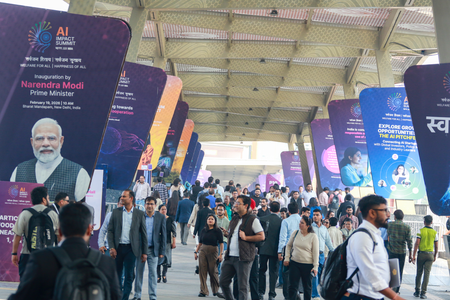
Meanwhile, accelerating AI adoption, reflected in an AI Enthusiasm Index score of 8, underscores India’s readiness to harness the next wave of productivity gains and reinforces its role as a key driver of Asia-Pacific’s economic outlook.
Globally, MEI expects real GDP growth to ease marginally to 3.1 per cent in 2026, compared to an estimated 3.2 per cent in 2025.
It notes that the global outlook for 2026 is shaped by a two-sided set of risks and opportunities. Fiscal stimulus and rapid technological progress—particularly the integration of AI into business operations — are expected to act as major tailwinds for growth, though the benefits will be uneven across regions.
“Given its centrality to global trade, Asia Pacific has shown remarkable resilience at a time when tariff uncertainty and shifting supply chains have threatened to upend international commerce,” said David Mann, chief economist, Asia Pacific, Mastercard.
“The largely positive outlook for the region’s consumers highlights a defining feature of 2026: even as trade realignments and technological shifts dominate the global narrative, microeconomic conditions across much of Asia Pacific are improving. For businesses, staying attuned to these underlying demand trends will be essential,” Mann noted.
Despite global realignments, Asia Pacific’s position at the centre of global supply chains remains intact, with India, ASEAN and the Chinese Mainland playing expanding roles as firms reconfigure sourcing and investment, said the report.
—IANS
na/