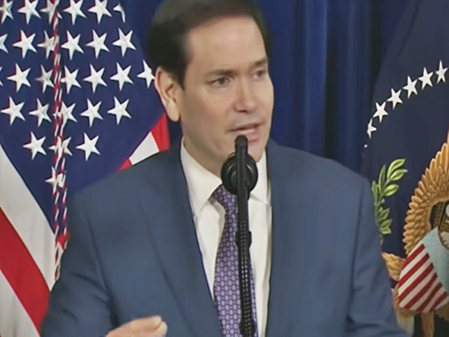
Washington, Jan 4 (IANS) US Secretary of State Marco Rubio on Sunday said the Donald Trump administration is relying on economic pressure, naval enforcement and oil sanctions to shape developments in Venezuela, as Washington seeks to curb drug trafficking, foreign influence and regional instability emanating from the country.
Speaking on CBS’ Face the Nation, Rubio said Venezuela’s oil sector lies at the centre of the crisis and represents the primary source of leverage for the United States.
“The key to what that regime relies on is the economy fuelled by oil,” Rubio said, describing an industry that, he argued, no longer serves the Venezuelan people. “None of the money from the oil gets to the people. It’s all stolen by the people that are on the top there,” he said.
Rubio said the United States has imposed what he described as an oil “quarantine”, backed by sanctions and naval deployments. “There’s a quarantine right now,” he said. “Sanctioned oil shipments — we go get a court order, we will seize it.”
He said the pressure campaign would remain in place until Washington sees concrete changes on issues it views as direct security threats. Rubio cited drug trafficking, organised criminal gangs and the presence of armed groups operating from Venezuelan territory as key concerns.
“We expect to see changes,” Rubio said, including action “so that they stop the drug trafficking, so that we no longer have these gang problems, so that they kick the FARC and the ELN out.”
Rubio also warned against foreign actors gaining influence in the Western Hemisphere. He said Venezuela has “cozied itself up to Hezbollah and Iran”, adding that such alignments are unacceptable to Washington.
Pressed on President Donald Trump’s remarks about retaining “all military options”, Rubio said the administration is not ruling anything out but stressed that current actions do not involve occupation.
“The President always retains optionality,” Rubio said, adding that the administration does not intend to publicly rule out tools available under US law and the Constitution.
Rubio said the current US force posture includes one of the largest naval deployments in modern history in the region, aimed at stopping drug shipments, enforcing sanctions and restricting revenue flows that sustain the system in place.
He linked Venezuela’s internal collapse to broader regional consequences, noting that eight to nine million people have left the country since 2014, which he described as “the largest mass migration event in modern history”.
“That is what we are addressing now,” Rubio said.
Rubio rejected comparisons with past US military interventions in other regions, arguing that the situation in Venezuela requires a different approach. “This is not the Middle East,” he said. “This is the Western Hemisphere.”
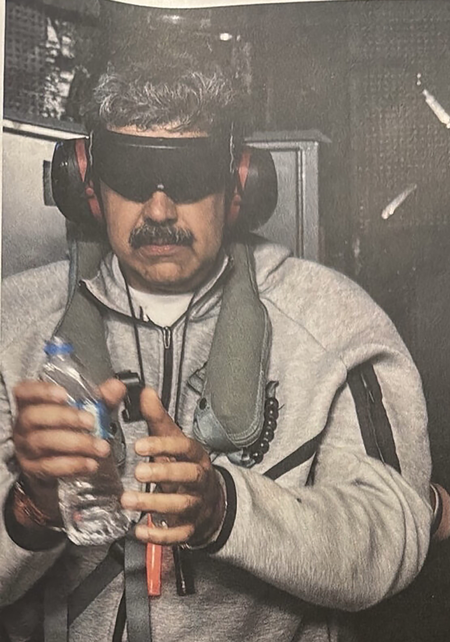
Asked about political transition and elections, Rubio urged realism. “Everyone’s asking why 24 hours after Nicolas Maduro was arrested, there isn’t an election scheduled for tomorrow,” he said. “That’s absurd.”
“These things take time,” he added. “There’s a process.”
Rubio declined to discuss details of private conversations with Venezuelan officials, describing them as “delicate and complicated”. He said Washington would judge future engagement based on actions rather than promises.
“We are going to make assessments on the basis of what they do,” Rubio said. “We are going to judge everything by what they do.”
The remarks are expected to be closely watched in New Delhi and other capitals as Washington frames Venezuela not merely as a domestic political crisis but as a case study in how state collapse, energy control, transnational crime and foreign influence can intersect to create wider security challenges.
Rubio said the administration’s objectives remain unchanged. “We want Venezuela to transition to be a place completely different than what it looks like today,” he said, adding that any outcome must reduce threats rather than export them beyond the region.
–IANS
int/lkj/pgh