Prayagraj, Jan 13 (IANS) In Prayagraj, Uttar Pradesh, the city of faith, the Magh Mela is currently underway on the sandy banks of the Sangam, the revered confluence of rivers. During this event, free meals (bhandara) is being provided to a large number of devotees. Sadhus, saints, and various religious and social organisations are tirelessly distributing food and ‘prasad (blessed offerings)’ to nourish millions of individuals each day, necessitating extensive and effective preparation.
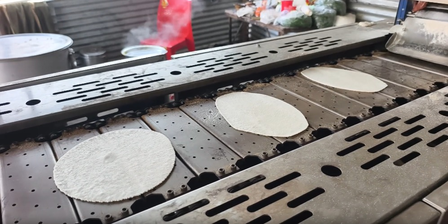
At the Shri Prayagwal camp set up during the Magh Mela, thousands of devotees receive prasad daily. To manage such a massive operation smoothly, modern and large-scale machines are being used to prepare food in a short span of time. Automatic machines are being deployed for various tasks, especially for making rotis (flatbreads), which are an essential part of the meal served to devotees.
One such machine can handle the entire process, from kneading the dough to baking the rotis. Rohit, the founder of Prayagwal, said that a single machine can produce approximately 2,000 rotis in about an hour with remarkable ease and efficiency. He added that their objective is to feed between 5,000 and 10,000 people every day, ensuring that a large quantity of food can be prepared quickly and distributed smoothly among devotees.
The primary purpose of the bhandara is to feed the hungry, which is considered a highly virtuous act in Indian tradition. This service is carried out with the firm belief that no devotee visiting the Magh Mela should go hungry. The large-scale food distribution reflects the spirit of selfless service, compassion, and devotion that lies at the heart of the Magh Mela.
The bhandara at the Magh Mela is a vast and significant undertaking, symbolising service, faith, and tradition. It showcases how modern technology is being blended with age-old religious practices to serve humanity more effectively.
The Magh Mela is held annually in the sacred region of Prayagraj on the banks of the Sangam during the Hindu month of Magh. Taking place on the banks of the Triveni, the fair is highly revered and attracts millions of devotees every year. Similar to the Kumbh Mela, the Magh Mela holds deep religious significance for Hindus.
While the Kumbh Mela is organised every 12 years at four locations — Prayagraj, Ujjain, Nashik, and Haridwar, Prayagraj uniquely hosts the Magh Mela every year during the month of Magh. This year, the Magh Mela began on January 3 and will conclude on February 15.
The Magh Mela of Prayagraj is considered one of the largest and oldest spiritual gatherings in the world. Prayagraj is the site of the sacred confluence of the Ganga, Yamuna, and the mythical Saraswati rivers, which greatly enhances the spiritual importance of bathing and charity during this period.
Religious beliefs hold that bathing at the Sangam during the Magh Mela bestows nectar-like benefits. It is said that performing charitable acts and virtuous deeds during the 45-day fair helps devotees attain liberation from sins. Apart from bathing and donations, worship, yagya, chanting, and homa hold special significance during the month of Magh, and devotees believe that such practices bring blessings from all gods and goddesses.
–IANS
jk/dpb