Bhopal, Jan 9 (IANS) In a significant step towards wildlife conservation, Madhya Pradesh Chief Minister Dr Mohan Yadav met Assam Chief Minister Himanta Biswa Sarma in Guwahati, reaching a principled agreement on the inter-state exchange of wild animals.
The pact aims to enrich biodiversity in both states, particularly by reintroducing species extinct in certain regions.
Under the agreement, Assam will translocate 50 wild water buffaloes to Madhya Pradesh over the next three years, in phased groups.
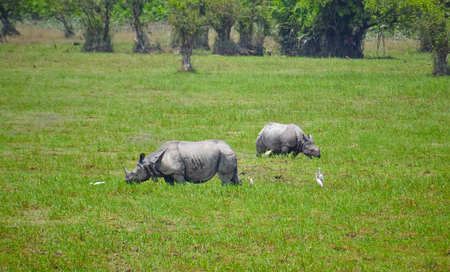
Additionally, a pair of one-horned rhinoceroses and three king cobras will be sent to the state. These animals, including the rhinos and cobras, will initially be housed at Van Vihar National Park in Bhopal for acclimatisation and public viewing.
The wild buffaloes, however, will be reintroduced into their historic habitat at Kanha Tiger Reserve.
In exchange, Madhya Pradesh will provide Assam with a pair of tigers and six mugger crocodiles, helping diversify Assam’s wildlife populations.
Announcing the development on his X handle, CM Yadav stated, “Steps will be taken to enrich wildlife and biodiversity in Madhya Pradesh. The extinct wild buffalo species will be reintroduced… 50 wild buffaloes, a pair of rhinos, and three cobras will be brought from Assam in the next 3 years. The buffaloes will be reintroduced in Kanha Tiger Reserve.”
Dr Yadav emphasised that this initiative follows the successful reintroduction of cheetahs in Kuno National Park, adding a new dimension to Madhya Pradesh’s conservation efforts.
The state, already known as the ‘Tiger State’ and ‘Leopard State’, is committed to restoring species that once roamed its forests.
The wild water buffalo (Bubalus arnee), an endangered species, became locally extinct in Madhya Pradesh over a century ago.
India’s primary population is now concentrated in Assam, particularly in Kaziranga and Manas National Parks, with global numbers under 4,000.
A comprehensive study by the Wildlife Institute of India (WII), Dehradun, identified Kanha Tiger Reserve as ideal for reintroduction due to its abundant grasslands, water sources, low human interference, and suitable herbivore dynamics.
–IANS
sktr/svn