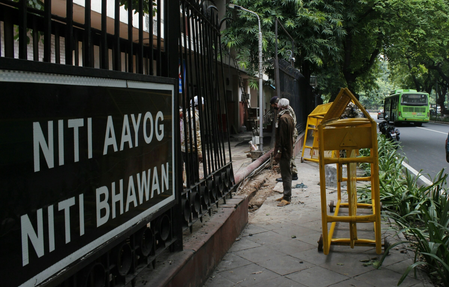
New Delhi, May 8 (IANS) NITI Aayog, in partnership with IIM Ahmedabad, the Gates Foundation and the Gujarat government, organised a workshop to launch State and District reports on Sustainable Development Goal 5 and to push for district‑level action on gender equality, an official statement said on Friday.
The technical sessions focused on strengthening SDG 5 monitoring and evidence systems, women’s economic empowerment and social empowerment of women, the statement from NITI Aayog said.
State and District reports on SDG 5 are policy briefs, encouraging data for development to generate insights and monitor progress across time, enabling more targeted interventions and budget alignment on gender equality.
Annapurna Devi, Minister for Women and Child Development highlighted the importance of high-quality data, robust ecosystems with tech-enabled monitoring and time-bound evaluations, for dynamic policy making.
Dr. Manisha Vakil, Minister for Women and Child Development, Social Justice and Empowerment Department, Gujarat, stressed the importance of implementation, deepening convergence and targeted interventions that are responsive to local needs and realities.
The technical sessions focused on strengthening evidence-based policymaking, advancing women’s economic empowerment and promoting community-led approaches for accelerating progress towards SDG 5.
Discussions highlighted the need for stronger gender-disaggregated data systems, district-level monitoring frameworks, gender-responsive budgeting, skilling, financial inclusion, care economy support and improved access to quality employment and enterprise opportunities.
Deliberations also emphasised behavioural interventions and grassroots institutional mechanisms to address gender norms and enhance women’s participation in social and economic decision-making.
Dr. M. Srinivas, Member, NITI Aayog emphasised that the report will help identify achievements and priority areas at the district level and support progress towards the 2030 targets.
Overall, the workshop reinforced the importance of moving from broad policy approaches to more granular, district-focused strategies for advancing gender equality.
The discussions demonstrated how the SDG 5 State and District analysis can serve as a critical tool for supporting data and evidence-led decision-making, enabling States and districts to understand local challenges better and design context-specific interventions.
The workshop brought together senior officials from states and Union Territories, representatives of central ministries, UN and international agencies including UNDP, UNICEF, UNWOMEN and the World Bank.
NGOs and experts also attended the event to share insights to drive evidence-based action at the district level.
—IANS
aar/pk