Islamabad, July 2 (IANS) Pakistan’s decision to host a so-called ‘international summit’ on the Indus Waters Treaty (IWT) in Islamabad recently was an attempt to gain global support while threatening India. However, Pakistan’s narrative overlooked terrorism that has resulted in India placing the IWT in abeyance.
Only a few prominent foreign participants attended the event, despite the summit being promoted as ‘international’, according to a report in StratNews Global. Reportedly, foreign participants included water security and foreign policy experts from the US and China.
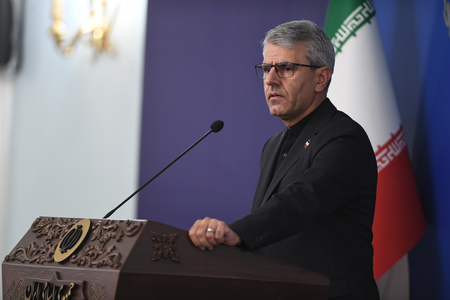
Pakistan Deputy Prime Minister Ishaq Dar delivered the keynote address, Climate Change Minister Musadik Masood Malik, Information Minister Attaullah Tarar, former Foreign Ministers – Bilawal Bhutto Zardari and Hina Rabbani Khar delivered remarks at the event.
During the event, Bilawal Bhutto Zardari said, “Pakistan’s Nuclear Bombs are not for ceremonial purposes. If all efforts fail to restore the Indus Water Treaty, Pakistan must explore the nuclear option.”
In his address at the event, Musadik Malik said that Islamabad would “cut off those hands” that want to control the Indus water.
“Yet after listening to the discussions, one question lingered. How many of the speakers had actually examined the treaty in detail or objectively assessed the implications of India’s decision? The treaty’s own preamble states that it was signed in a spirit of goodwill and friendship. India argues that Pakistan’s continued use of terrorism as an instrument of state policy has eroded that very foundation,” Nitin Gokhale wrote in StratNews Global.
Following the heinous terror attack in Jammu and Kashmir’s Pahalgam in April 2025, India had exercised its rights as a sovereign nation under international law and placed Indus Water Treaty in abeyance until Pakistan stops its support for cross-border terrorism.
Pakistan is now trying to convince international community that India’s decision regarding Indus Water Treaty sets a dangerous precedent for nations that share transboundary rivers. A few months back, Pakistan Prime Minister Asif Ali Zardari held a meeting with selected Pakistani influencers and senior bureaucrats to gain international support on the issue. Pakistan also attempted to shape global opinion through institutions like London’s Chatham House and Brussels-based Centre for European Policy Studies, StratNews Global report detailed.
“The centrepiece of this campaign is the claim that India is ‘stopping water’. What that narrative leaves out is the event that triggered the present crisis. What it also leaves out is the totally skewed character of the treaty, which grants Pakistan almost 80 per cent of the total water carried by the Indus water system,” wrote Gokhale.
On June 5, India rejected Pakistan’s criticism of two river projects and reiterated its consistent stance on the IWT, saying that the agreement remains in abeyance until Pakistan completely stops cross-border terrorism.
The Ministry of External Affairs’ (MEA) statement came after Pakistan said India was seeking to “weaponise water” by advancing the Chenab-Beas Link Tunnel Project and plans to flush silt from the Salal Dam reservoir.
“We have suspended the Indus Waters Treaty and kept it in abeyance until Pakistan completely stops cross-border terrorism,” MEA spokesperson Randhir Jaiswal said while replying to a question on Pakistan Foreign Ministry’s statement during a weekly media briefing in New Delhi.
After last year’s heinous Pahalgam terror attack, India exercised its rights as a sovereign nation under international law and placed IWT in abeyance until Pakistan credibly and irrevocably abjured its support for cross-border terrorism.
“Until such time that the Treaty is in abeyance, India is no longer bound to perform any of its obligations under the Treaty. No Court of Arbitration, much less this illegally constituted arbitral body which has no existence in the eye of law, has the jurisdiction to examine the legality of India’s actions in exercise of its rights as a sovereign,” the MEA had stated in June 2025.
–IANS
akl/as